
Last updated November 22, 2026
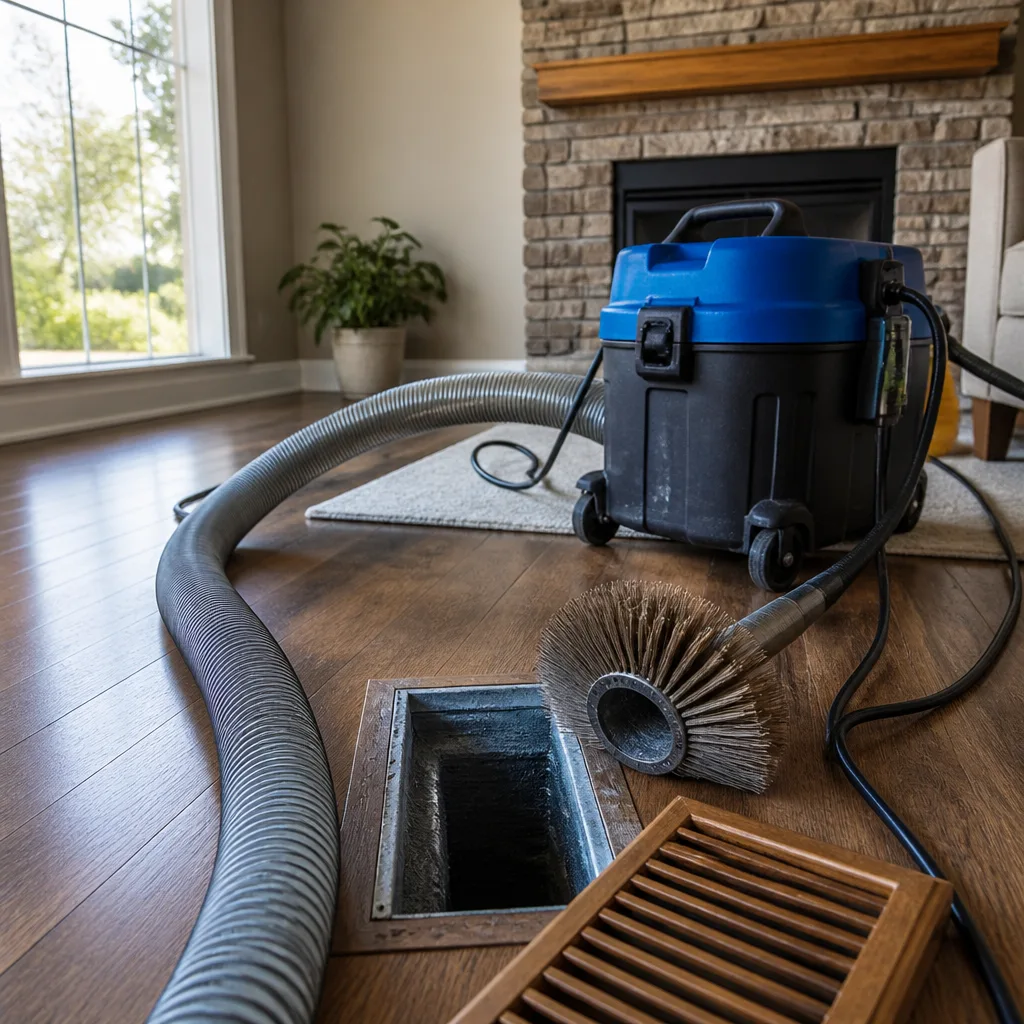 Whole-home duct cleaning
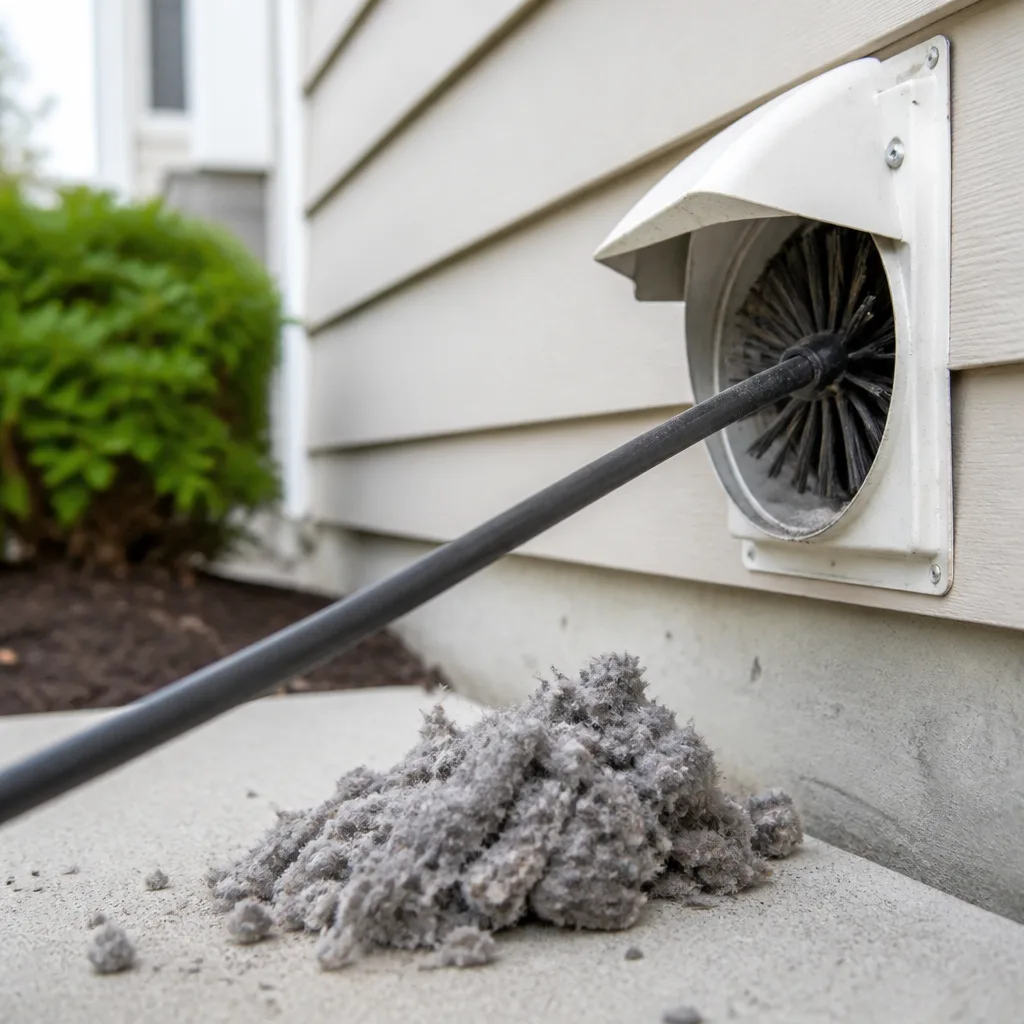 Dryer vent cleaning
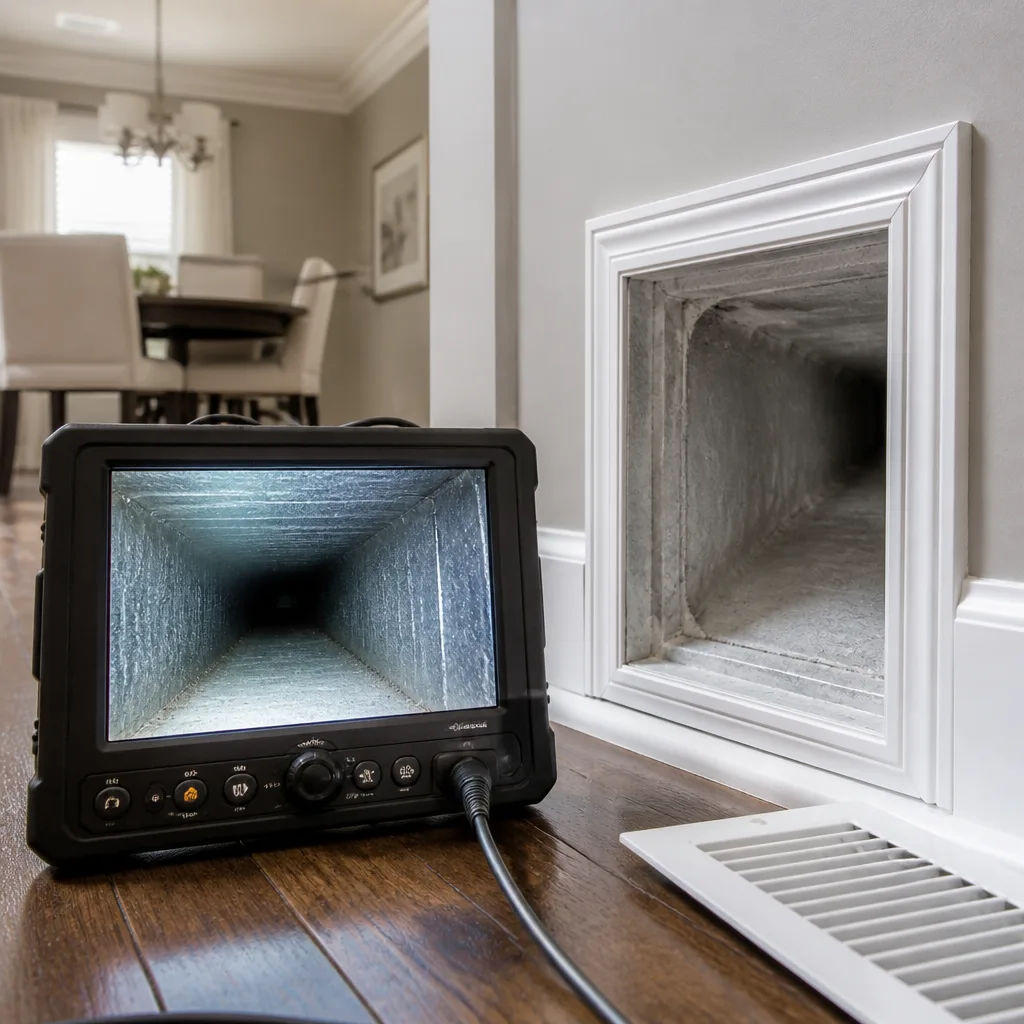 Camera inspection
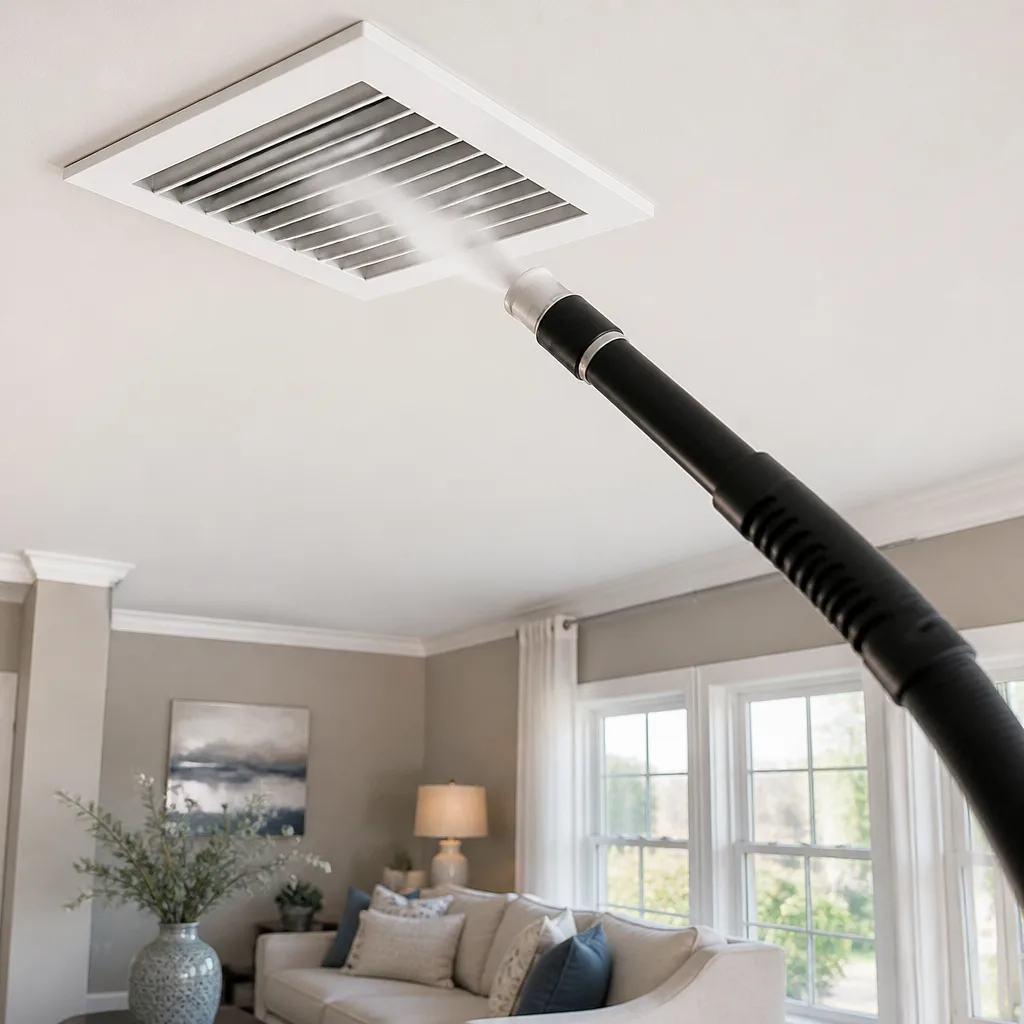 Sanitizing & deodorizing
Whole-system duct and dryer vent check with before-and-after photos - you see exactly what came out of your vents
That "$99 whole-house special" is a bait ad - the real number appears once they are in your hallway, or the "clean" is a shop-vac at the register. We photograph the inside of your ducts before and after instead.
How to Hire an Air Duct Cleaning Contractor in Soundview: A Step-by-Step Guide
The most dangerous air duct cleaning company isn’t the one that does nothing. It’s the one that shows up with a shop vac and a spinning brush, skips negative pressure containment, and turns settled mold spores in your ducts into airborne ones moving through every bedroom in the house. That’s not a scare story. It’s how vacuuming without containment works: you loosen debris faster than you capture it. The second-most dangerous is the low-bid cleaner with no access panels, no blower cleaning, and a flat rate that doesn’t account for your system’s size. This guide walks you through exactly how to hire an air duct cleaning contractor in Soundview – what to ask, what to verify, and what to put in writing.
Quick Answer
Hire an air duct cleaning contractor in Soundview by verifying three things before you book: the equipment (a truck-mounted or portable negative air machine with a stated CFM rating, not a shop vac), the scope (blower assembly and coil included, access panels created where needed), and the documentation (before-and-after photos of your own system). Ask those questions before anyone arrives, get the scope in a written contract, and treat any cleaner who can’t answer them as a disqualification, not a negotiation.
Styles & brands we work with
- Whole-home duct cleaning
- Dryer vent cleaning
- Camera inspection
- Sanitizing & deodorizing
Table of Contents
- The Three Questions to Ask Before You Hire Anyone
- Why Negative Pressure Is the Whole Ballgame
- What NADCA Membership Certifies – and What It Doesn’t
- Red Flags Specific to Low-Bid Bronx Duct Cleaners
- How to Verify Equipment Before They Arrive
- Contract Terms That Actually Protect You
- What “Sanitizing” Includes – and What It Doesn’t
- Why the Full System Matters in Soundview
The Three Questions to Ask Before You Hire Anyone
If you ask nothing else, ask these three questions on the phone. A competent contractor answers them without hesitation. A poor one stalls, pivots to price, or tells you the questions are too technical.
- “What negative air machine do you use, and what’s its CFM rating?” CFM means cubic feet per minute. It’s the measurement of how much air the machine captures and exhausts. A good answer includes a brand name and a number. A bad answer is “we use a powerful vacuum” or “it’s HEPA.”
- “Do you clean the blower assembly and the coil, or just the duct runs?” The blower assembly moves the air, and the coil conditions it. Both collect debris. Cleaning only the ducts while leaving a dirty blower and coil is like washing a car and ignoring the engine bay.
- “Can you show me before-and-after photos from a similar system?” Not stock photos. Not generic marketing images. Photos from a real job on a duct system shaped like yours – slab, basement, attic, or crawlspace.
These questions work because they can’t be faked. Someone who does this work daily knows their machine by name and number. Someone who bought a brush kit and a wet/dry vac last month doesn’t. In our experience across Soundview homes, the answer to question one tells you almost everything about the other two.
Why Negative Pressure Is the Whole Ballgame
Negative pressure containment means the cleaning machine pulls air out of your duct system and exhausts it outside or through a HEPA filter, so the entire duct network sits under a slight vacuum during the work. Every brush stroke, every air whip, every agitation tool loosens debris. Under negative pressure, that debris travels toward the machine and out of the house. Without it, debris travels into your living room.
This matters in Soundview more than most people realize. The neighborhood’s pre-war and mid-century housing stock often has original sheet metal ductwork with taped or sealed joints that have loosened over decades. Those joints leak. Under positive pressure – a shop vac blowing air in, or a brush spinning with no vacuum attached – the leaks become delivery points for whatever is in the ducts.
What good containment looks like:
- A negative air machine connected to the main trunk or a purpose-cut access port, running the entire job
- CFM rated high enough to maintain vacuum while brushes and air whips are actively agitating
- HEPA filtration on the exhaust, or exhaust routed outside the living space
- Register covers removed and every supply and return branch agitated in sequence
We run Rotobrush and Nikro equipment – the same systems professionals rely on in commercial buildings – precisely because containment capability is the difference between cleaning and redistributing. If a contractor can’t explain their containment setup in plain language, don’t book the job.
What NADCA Membership Certifies – and What It Doesn’t
NADCA, the National Air Duct Cleaners Association, sets an industry standard for how duct cleaning should be performed and offers certification for individuals and firms. Membership and certification are worth checking. They are a floor, not a ceiling.
Here’s what NADCA certification tells you. The firm has committed to a published standard of care, the technicians have passed a knowledge assessment, and the company adheres to a code of ethics. That filters out the worst operators. It does not, by itself, tell you:
- What brand and model of negative air machine they run
- Whether the machine’s CFM is adequate for your system’s size
- Whether their technicians create access panels or rely on existing openings
- Whether they clean the blower and coil as standard or only on request
- Whether they photograph their work
Those details live in the equipment and the process, not the certificate. A NADCA-certified firm with an undersized machine will still underperform a non-certified firm running proper equipment. Treat certification as one input among several – useful, but not a substitute for the three questions above. In Soundview, where duct layouts vary enormously from building to building, the equipment question matters more than any badge.
Red Flags Specific to Low-Bid Bronx Duct Cleaners
Soundview sits in the Bronx, and the local market has a predictable pattern of low-bid operators. They advertise a very low number, arrive with minimal equipment, and either rush the job or build the invoice through add-ons. These are the specific tells.
- Flat-rate pricing that ignores system size. A 900-square-foot apartment and a 2,500-square-foot house with a full basement trunk line are not the same job. A price quoted before anyone asks about your system’s size is a price that will change.
- No mention of access panels. Many Soundview systems – especially older ones – have no accessible cleanout. Proper cleaning requires cutting and sealing access panels. A contractor who never brings it up either skips cleaning the trunk or plans to charge you for it later.
- Antimicrobial upsell on the first call. If the pitch includes a chemical treatment before anyone has seen your ducts, that’s a sales script, not an assessment. Sanitizing is a legitimate service – it should follow inspection, not precede it.
- No before-and-after documentation offered. If photos aren’t part of the standard process, the “proof” is your trust in a stranger.
- No brand names. Ask what equipment they use. “Professional-grade” with no brand is not an answer. Legitimate operators name their machines.
- Pressure to decide today. Duct cleaning is a scheduled job. There is no deadline that requires a decision on the call.
One practical note on Soundview housing: many buildings have radiator heat with no ductwork at all, or window units rather than central air. If a company quotes you a duct cleaning without confirming you have a forced-air system, that tells you everything about how they operate. Ask them to confirm your system type before you book.
How to Verify Equipment Before They Arrive
You don’t need to become an HVAC technician to vet equipment. You need to ask for brand and rating, then check whether the answer holds together. Here’s the process.
- Ask for the machine brand and CFM rating. Write it down. Rotobrush and Nikro are the two names you’ll hear from serious residential duct cleaners, along with truck-mounted systems in larger operations. If the answer is “we use a HEPA vacuum,” ask what brand and what CFM.
- Ask how they exhaust. A proper machine exhausts outside or through HEPA filtration. If the answer is “into the room,” that’s a problem – the room is where you live.
- Ask whether the machine runs continuously during agitation. It should. A machine that runs for a minute and stops while brushing resumes is theater.
- Ask for the blower and coil process. The blower assembly is removed or accessed and cleaned separately. The coil is cleaned in place or removed depending on type. A contractor who says “we clean the whole system” but can’t describe either step is guessing.
- Ask about the air purification equipment they use for sanitizing work. Legitimate firms will name their systems. Abatement Technologies air purification equipment, for example, is remediation-grade equipment – a different tier from a spray bottle of “antimicrobial.”
Verification is not an interrogation. A good contractor will appreciate that you asked and will answer in plain language. The discomfort you feel asking is nothing compared to the discomfort of finding mold spores in your supply registers after the job.
Contract Terms That Actually Protect You
The written contract is where a good job and a bad job diverge. Verbally promising to clean everything is easy. Putting the scope in writing is where operators separate. Insist on these terms.
- Scope of work in specific terms. The contract should name the system components: supply trunks, return trunks, branch runs, blower assembly, coil, registers, and any access panels to be created. “Clean air ducts” is not a scope of work.
- Access panel creation listed explicitly. If panels need to be cut and sealed, that’s a line item. It’s also a sign of a legitimate contractor, not a red flag.
- Before-and-after photo requirement. The contract should state that photographic documentation of your system is provided at completion. This is one of the strongest protections you can build in – it forces the crew to document, and it gives you a real record.
- Sanitizing scope defined. If you’re paying for sanitizing, the contract should state which chemicals or systems are used, where they’re applied, and what’s excluded. More on this below.
- Written estimate covering the whole system. One price per system, agreed before work begins. No per-vent pricing, no surprise charges for access or the blower.
- Repair and sealing findings documented. If the technician finds disconnected or crushed ducts – and in Soundview’s older housing stock, they often do – the repair scope should be itemized, not folded into a verbal “we’ll take care of it.”
We put all of this in writing before work begins, and we include before-and-after photos of your own ducts as part of the finish. A fair price, agreed upfront, with documentation you can keep, is the standard we work to. A good written contract lets you compare bids honestly because they’re comparing the same scope.
What “Sanitizing” Includes – and What It Doesn’t
Sanitizing is a legitimate, useful step in duct work – and one of the most misrepresented. It is not a substitute for cleaning, and it is not a chemical that magically purifies the air in your home. Here’s what it actually involves.
Sanitizing means applying an EPA-registered product to the interior surfaces of the ductwork after mechanical cleaning to reduce microbial growth – mold, mildew, bacteria – on those surfaces. It follows cleaning. It doesn’t replace it. Applying a sanitizer to a duct system still coated in dust and debris is like spraying disinfectant on a dirty counter: the surface underneath is still there.
What sanitizing does not do:
- It does not kill mold in the walls, ceiling cavities, or HVAC cabinet that aren’t ducted surface
- It does not address the source of moisture, which is what allowed mold to grow in the first place
- It does not make the air in your home “pure” – it reduces what’s living on the surface you cleaned
- It does not include air purification equipment or whole-home filtration unless separately specified
What good sanitizing looks like in practice: a technician assesses the system after cleaning, identifies whether microbial growth is present, and uses professional air purification equipment – remediation-grade, not consumer spray – to apply treatment to the cleaned surfaces. When we use Abatement Technologies air purification equipment, we’re equipped for real sanitizing, not just surface cleaning. If you’re thinking about permanent air-quality upgrades, we install Honeywell and Aprilaire solutions as a follow-on step to cleaning. Ask specifically which products and which equipment are included, and get it in writing.
Why the Full System Matters in Soundview
Air ducts are one part of a connected system: dryer vent, HVAC cabinet, blower, coil, duct runs, registers. Each component affects the others. Cleaning only the duct runs while leaving a matted blower, a fouled coil, and a clogged dryer vent is a partial job – and in Soundview, partial jobs are the most common complaint we hear about.
Soundview’s housing stock makes this matter more, not less. Many buildings are older, some have ductwork that’s been retrofitted or modified through decades of renovations, and forced-air systems coexist with radiator heat and window units on the same block. Ductwork that’s been added or rerouted deserves a full assessment – not just a brush pass.
This is also why repair and sealing deserve equal billing with cleaning. Ducts in older Bronx homes often have disconnected joints, crushed flex runs behind new kitchen cabinetry, and poorly sealed seams at the air handler. Cleaning a leaky system doesn’t fix the leaks. Air continues to escape into walls and unconditioned spaces, which wastes the conditioned air you paid for and pulls unfiltered air from the wall cavities into the system. Proper sealing, done after cleaning, is what makes the job last.
Dryer vents belong in this conversation too. Lint accumulation in a dryer vent is a well-documented fire hazard, and HVAC-only companies often skip it entirely. If you’re already scheduling service, ask about dryer vent cleaning at the same time – one call covers both.
Common Mistakes to Avoid
- Booking on price alone without confirming the scope. The lowest quote is often the one with the smallest machine and the fewest steps. Get the scope in writing before you compare numbers, or you’re not comparing the same job.
- Never asking about the blower and coil. Duct runs cleaned but blower and coil left untouched is the most common half-job in the Bronx market. Ask directly.
- Accepting a verbal scope. “We’ll do the whole system” is not a scope. Get it written and named component by component.
- Not asking for before-and-after photos. Without photographic documentation of your system, you have no way to know what was actually done. Build it into the contract.
- Confusing sanitizing with cleaning. A pass with a spray bottle before any mechanical cleaning isn’t sanitizing. It’s marketing. Sanitizing follows cleaning and uses professional equipment.
- Forgetting the dryer vent. If you’re already booking service, adding dryer vent cleaning to the visit addresses a fire risk most HVAC-only companies ignore – and avoids a second visit later.
- Not confirming whether you have a forced-air system at all. Soundview has plenty of radiator-heat buildings. Confirm your system type before you book, and be suspicious of a company that doesn’t ask.
See the difference
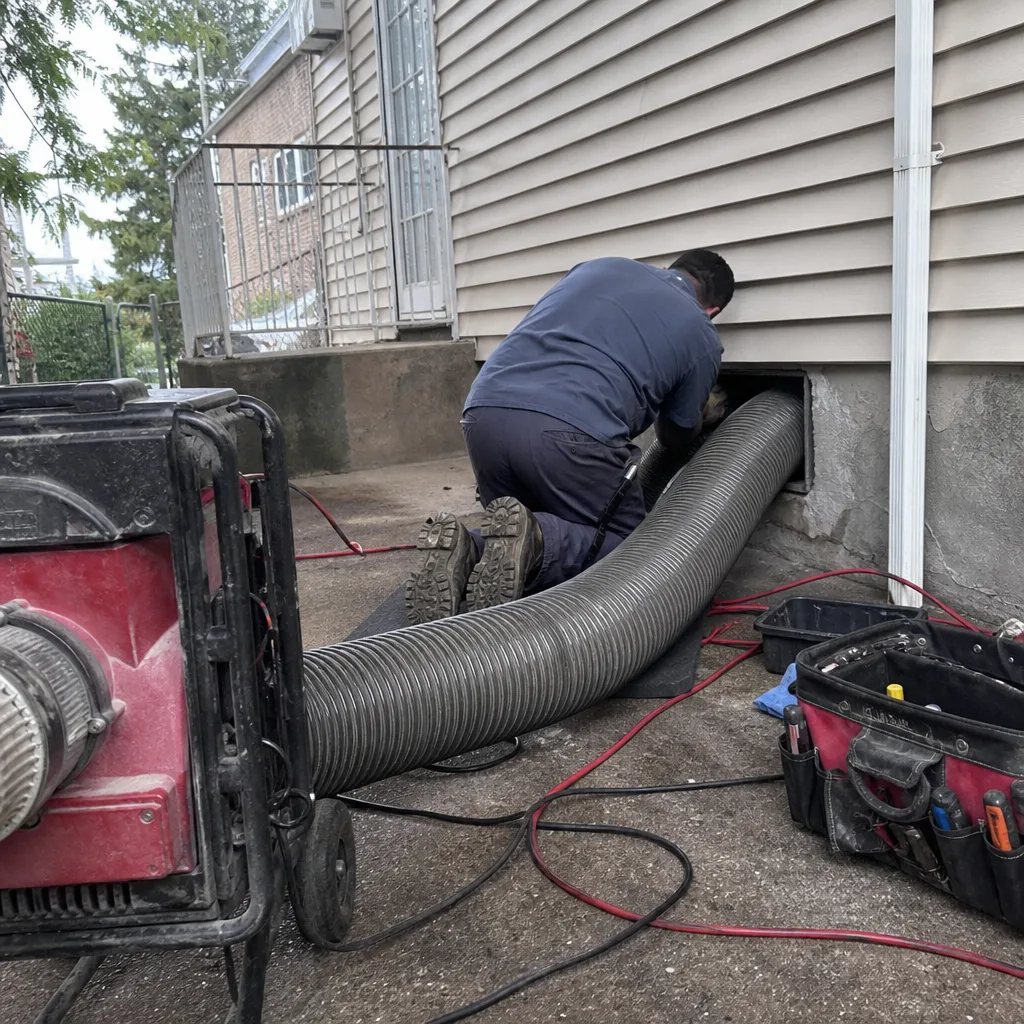 Before
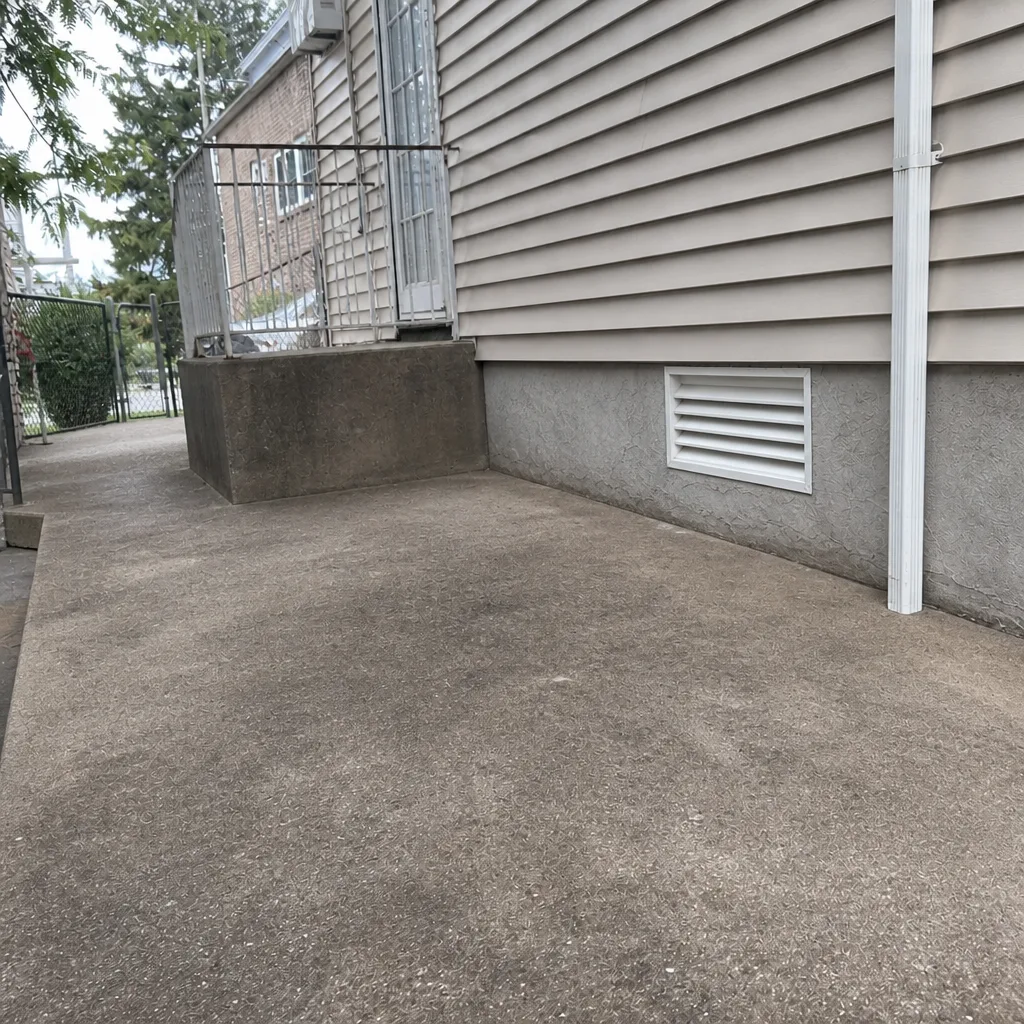 After
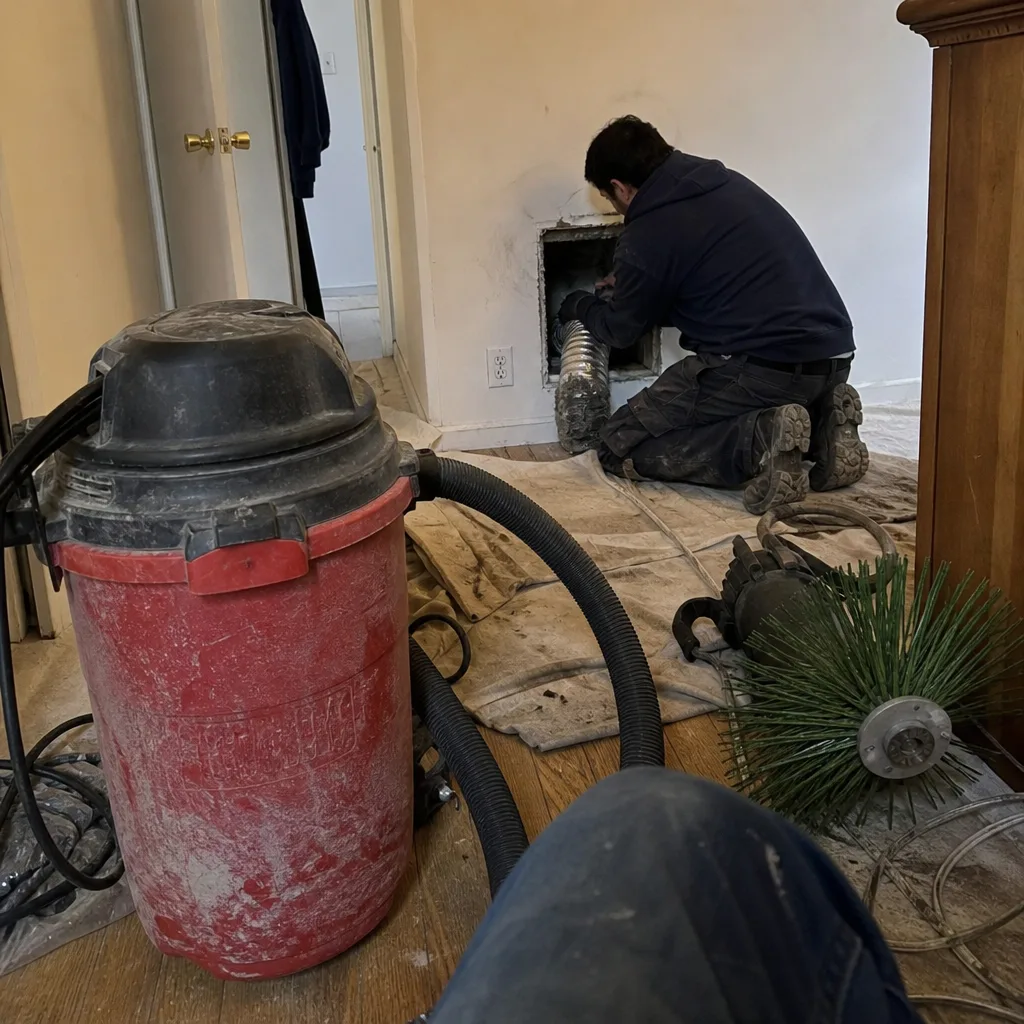 Before
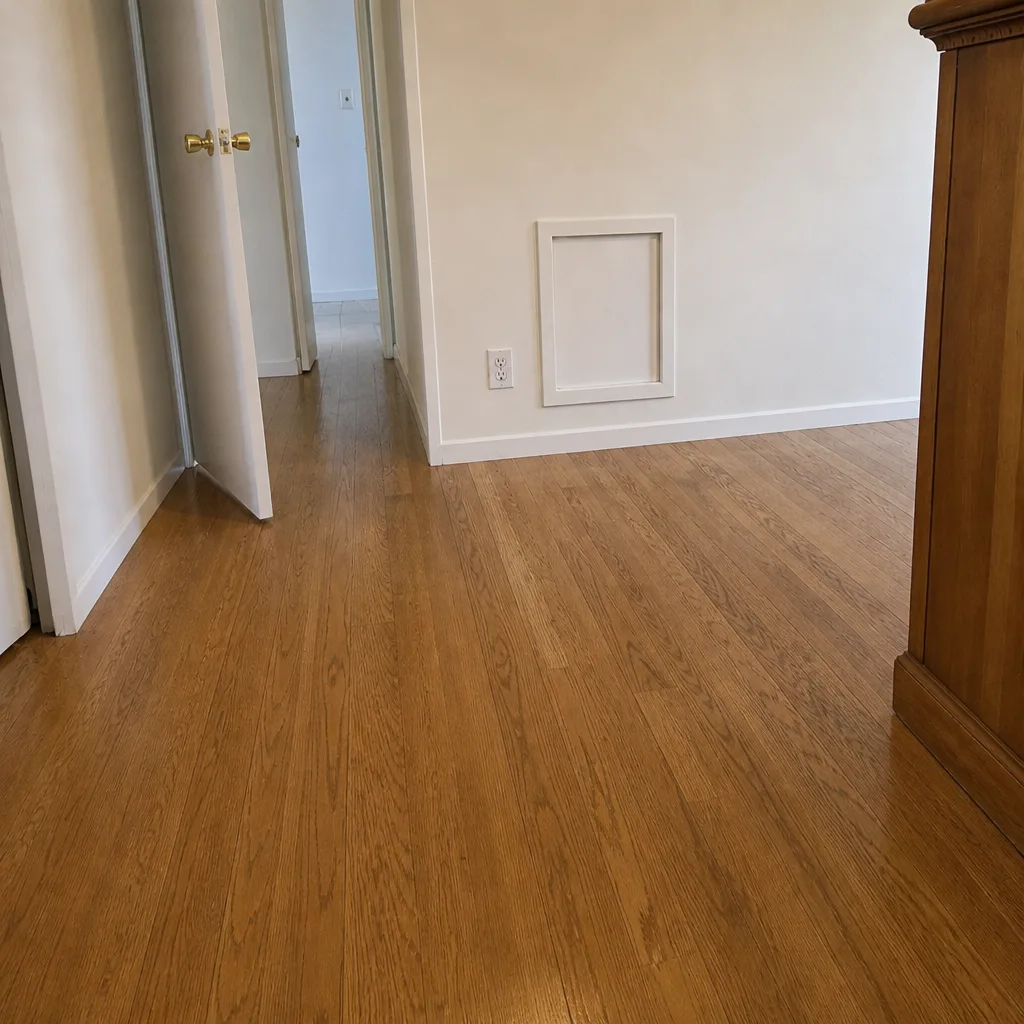 After
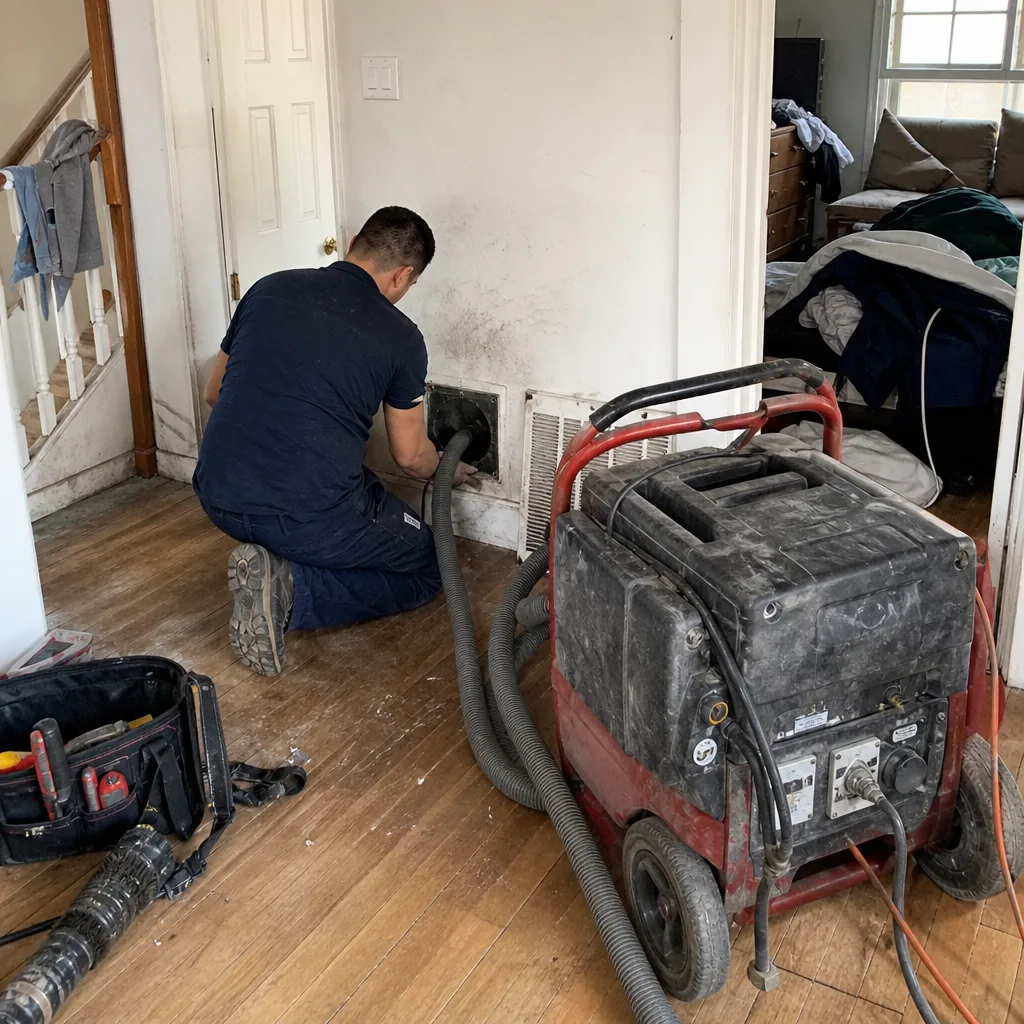 Before
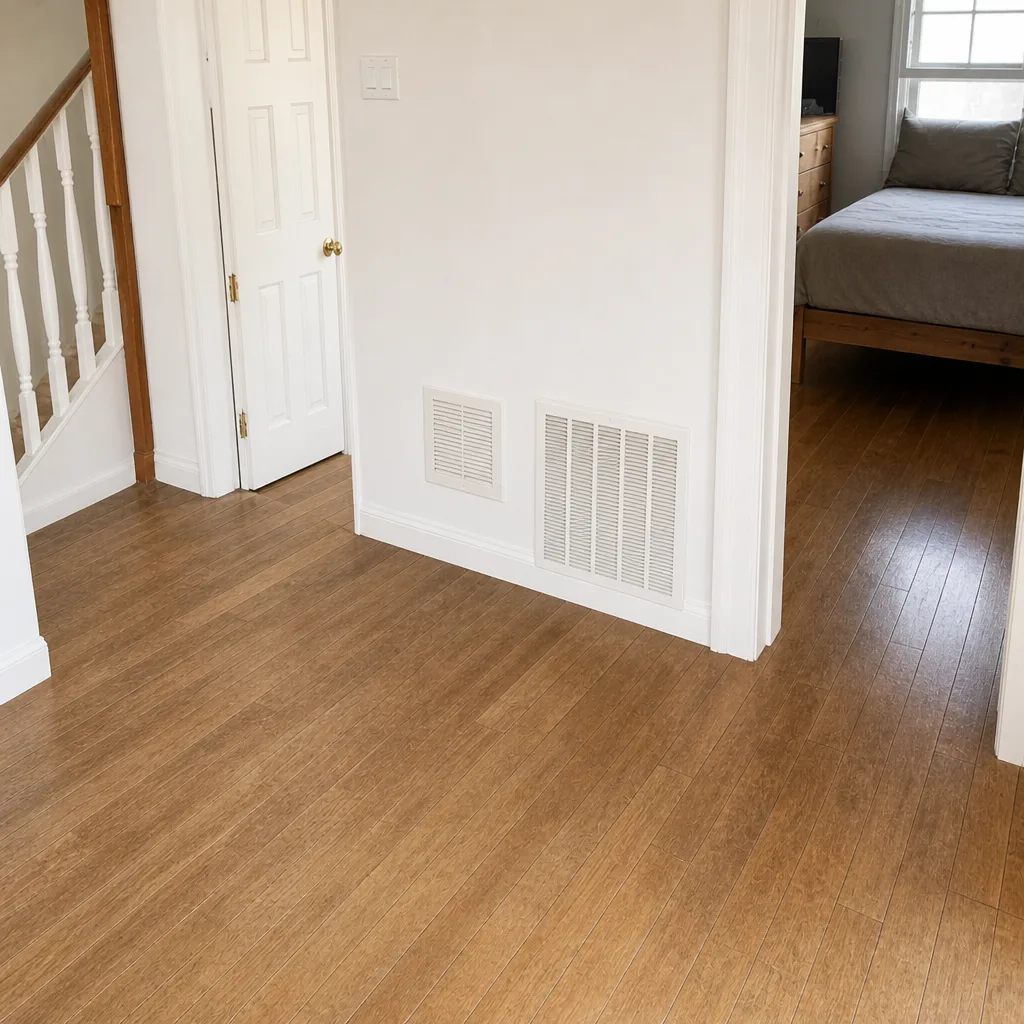 After
When to Call a Professional
Some signs of duct problems are obvious enough that you shouldn’t wait. Visible dust blowing from supply registers right after you change the filter. A musty or stale smell that appears when the HVAC kicks on and vanishes when it doesn’t. Allergy or respiratory symptoms that worsen in specific rooms. Uneven airflow – strong at one register, weak at another. Energy bills that climb without a matching change in usage. And any dryer that takes noticeably longer than it used to dry a load of laundry, which is a lint-clog indicator, not a machine problem. In Soundview’s older homes, disconnected or crushed duct runs behind recent renovations are common, and they show up as exactly the symptoms above.
If any of that sounds familiar, the right step is assessment, not a coupon. Air Duct Cleaning Soundview offers free estimates in Soundview – call (844) 630-1582. We answer 24/7. Fast dispatch from 7am to 7pm, Sunday through Friday. Air Duct Cleaning Soundview technicians have up to 8 years of experience, and every estimate is per system in writing.
Frequently Asked Questions
Air duct cleaning in Soundview is priced per system, not per vent, and the final price is set by a written estimate after assessing your system’s size and layout. Whole-system pricing varies with square footage, number of trunks and branches, whether access panels need to be created, and whether the job includes blower and coil cleaning. A one-bedroom apartment and a multi-zone house are different jobs, and any price quoted before anyone sees your system isn’t a real estimate. Call (844) 630-1582 for an exact quote – estimates are free.
Cheap quotes skip the expensive parts: they use a shop vac or an undersized machine instead of a proper negative air machine with a stated CFM, they clean duct runs without touching the blower and coil, they don’t cut access panels, and they don’t provide before-and-after photos. What looks like a bargain is usually a partial job – and in the worst cases, a job that loosens debris without containment. The right comparison is whole-system scope, written down, side by side. Call (844) 630-1582 for a full-scope estimate – the estimate is free and there’s no obligation.
You know the work was done because you have photographs of your own system before and after, taken by the crew and included at completion. Not stock photos, not marketing images – your ducts. Combine that with a written scope of work you can check line by line, and you have a real record of what happened inside your system. If a company doesn’t offer and document before-and-after photos, don’t book them. Call (844) 630-1582 and ask for photo documentation as part of the estimate.
For most Soundview homes, every three to five years is reasonable – and the interval depends on what your system is exposed to: recent renovation work, pets, smokers in the home, nearby construction, and moisture problems all shorten the cycle. More useful than a fixed calendar is a yearly check: clean or replace filters on schedule, look for dust at registers, and listen for airflow changes. If your ducts were cleaned and you’re seeing dust again in a few months, the real issue may be unsealed or disconnected ductwork, not the cleaning schedule. Call (844) 630-1582 and we’ll help you decide whether cleaning or sealing is the right next step – estimates are free.
Ask three questions: what negative air machine they use and its CFM rating, whether they clean the blower assembly and coil in addition to the duct runs, and whether they provide before-and-after photos from a similar system. A contractor who does this work regularly answers all three in plain language. A contractor who doesn’t will deflect. If you’re comparing quotes, ask each company the same three questions and compare the answers next to the scope of work. Call (844) 630-1582 for an exact quote – estimates are free.
Sanitizing is worth it when a system has visible microbial growth or odor after proper cleaning, and it’s not worth it as a first-step upsell before anyone has assessed your ducts. Real sanitizing means applying an EPA-registered product to cleaned duct surfaces using professional air purification equipment – not a spray bottle pass on a dirty system. Ask what equipment and products the company uses, and get the scope in writing. Call (844) 630-1582 for an exact quote – estimates are free and we’ll tell you plainly whether sanitizing makes sense for your system.
The Bottom Line
Hiring a duct cleaner in Soundview comes down to three things: equipment, scope, and documentation. Verify the equipment (negative air machine brand and CFM, not a shop vac), confirm the scope (blower and coil included, access panels created), and require documentation (before-and-after photos of your own system). Treat NADCA certification as a floor – useful but not a substitute for asking direct questions. Beware of low-bid operators who price before they assess and upsell antimicrobial before they’ve seen anything. Then get it all in writing. That written contract, with a single price per system agreed before work starts and photos at the end, is what protects you from a duct system that’s “cleaned” but functionally worse than it was. Learn more about Air Duct Cleaning Soundview, our air duct cleaning service, and our HVAC cleaning work.
When you’re ready to move from questions to an assessment, call (844) 630-1582 for a free estimate. We answer 24/7. Fast dispatch from 7am to 7pm, Sunday through Friday. One call covers the full system – air ducts, dryer vents, HVAC cleaning, duct repair and sealing, and air quality and sanitizing – with professional equipment from Rotobrush and Nikro, and air purification capability through Abatement Technologies.
Written by the team at Air Duct Cleaning Soundview.