
Last updated November 22, 2026
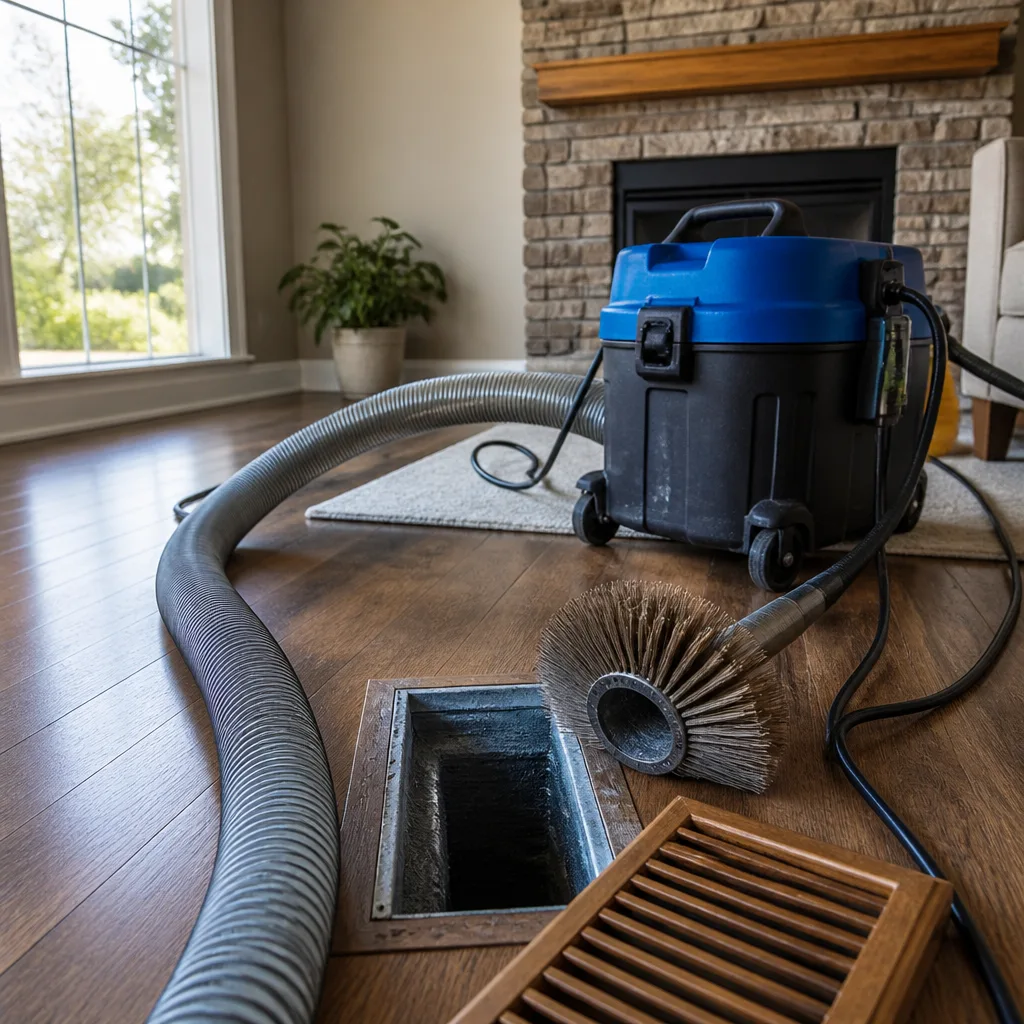 Whole-home duct cleaning
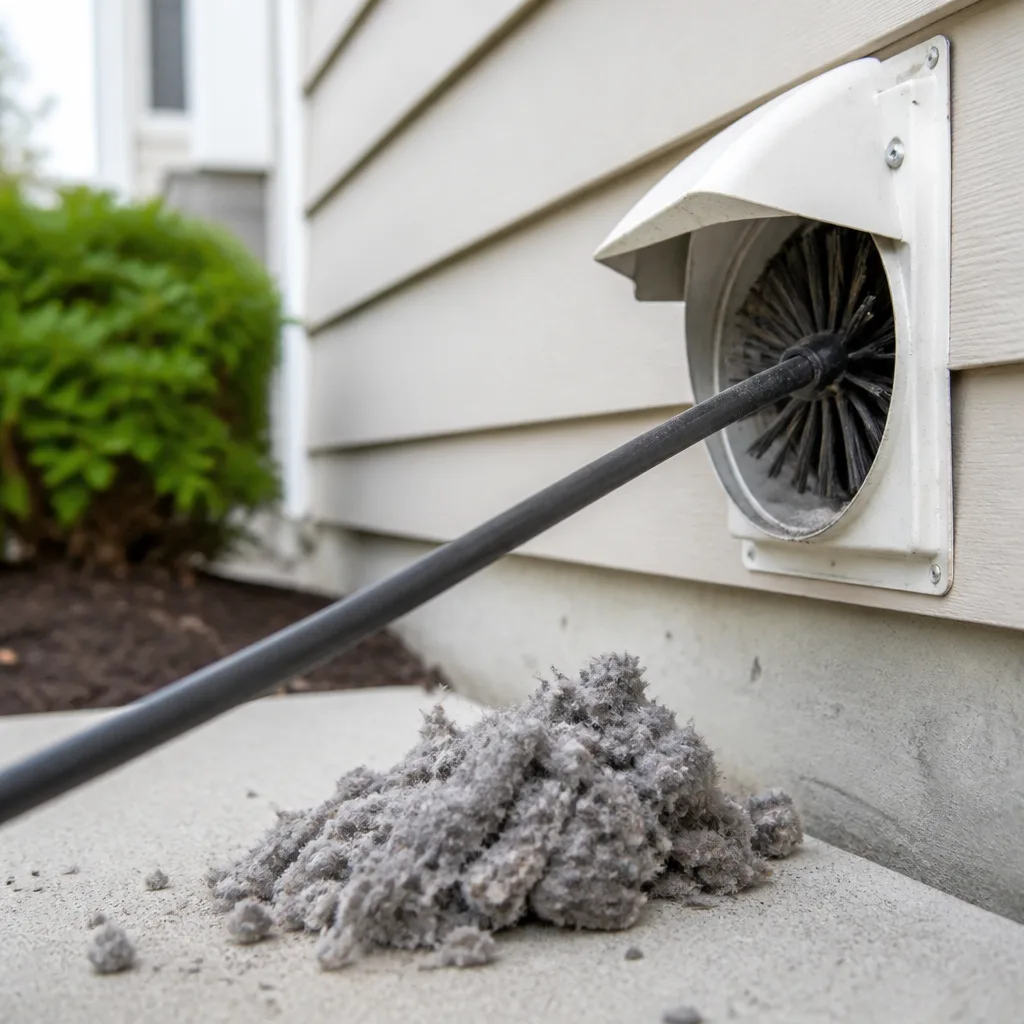 Dryer vent cleaning
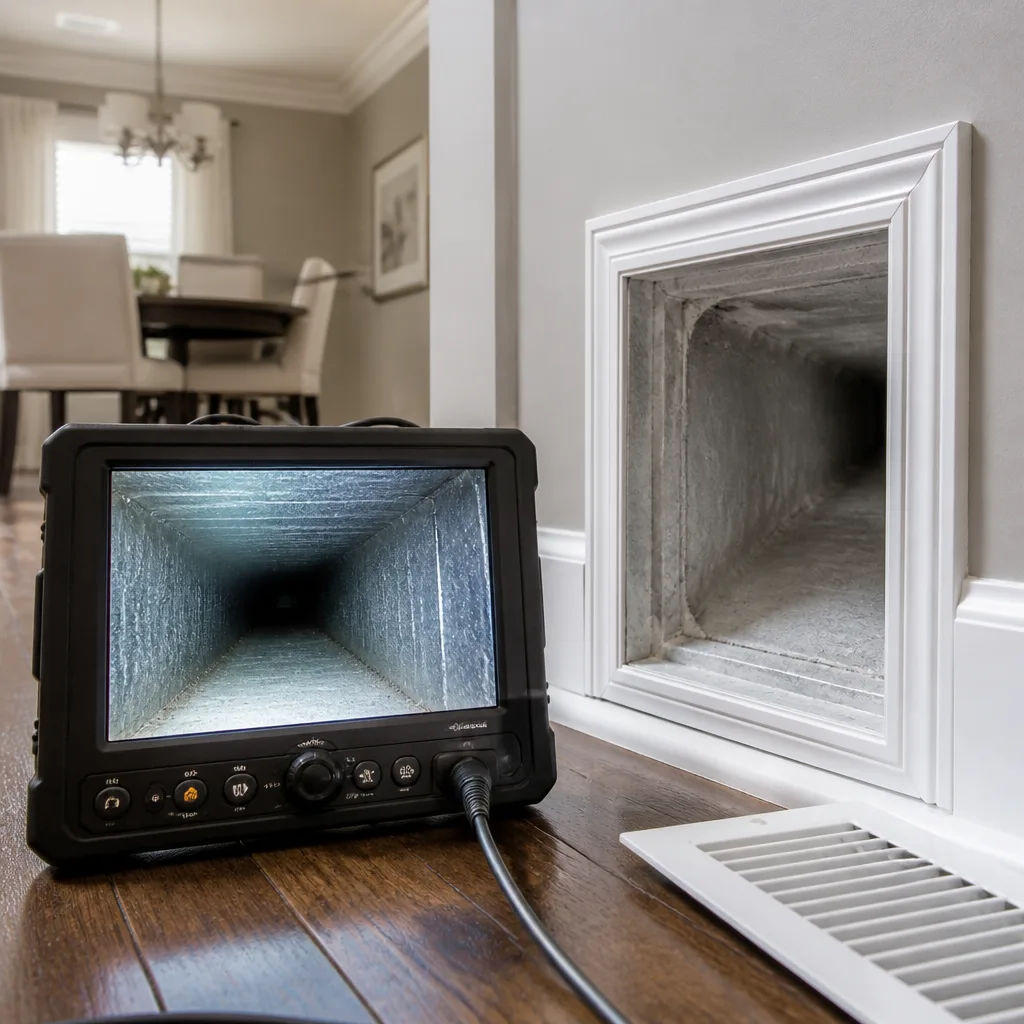 Camera inspection
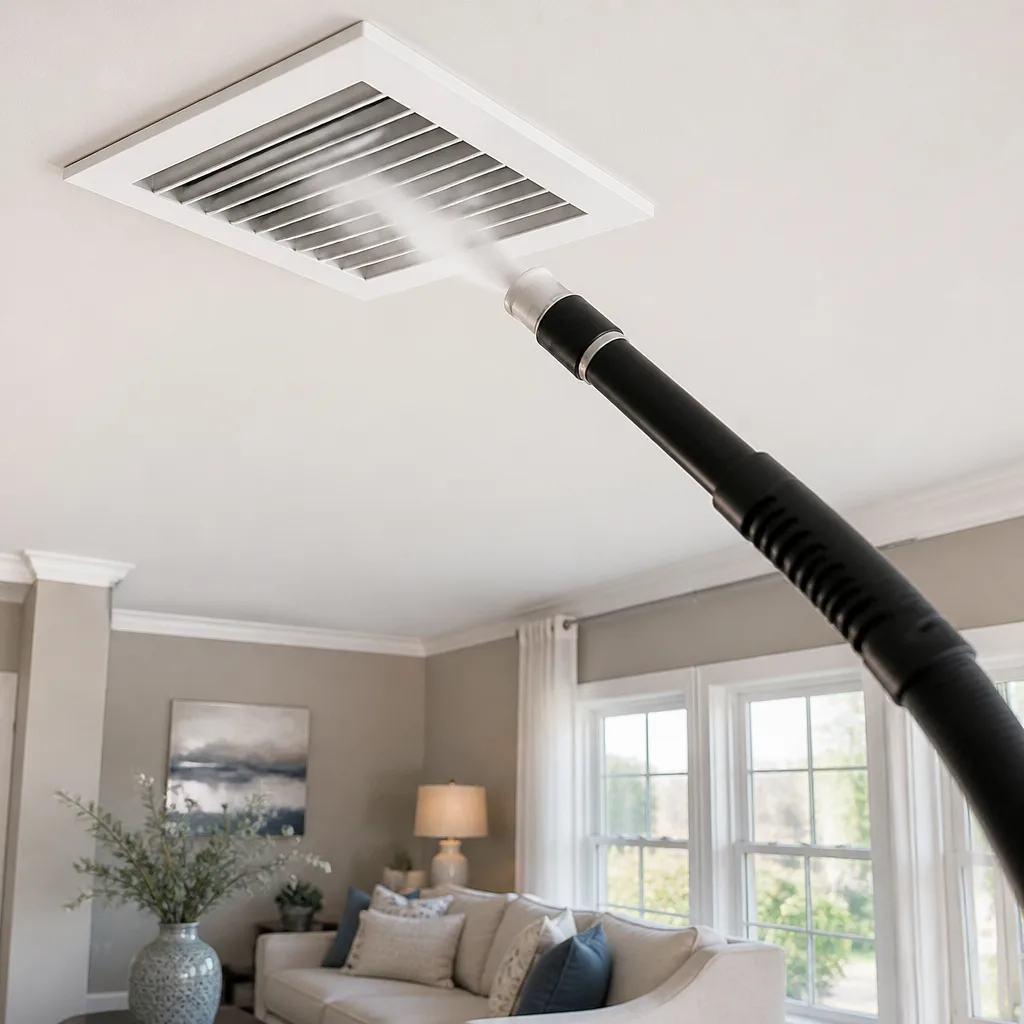 Sanitizing & deodorizing
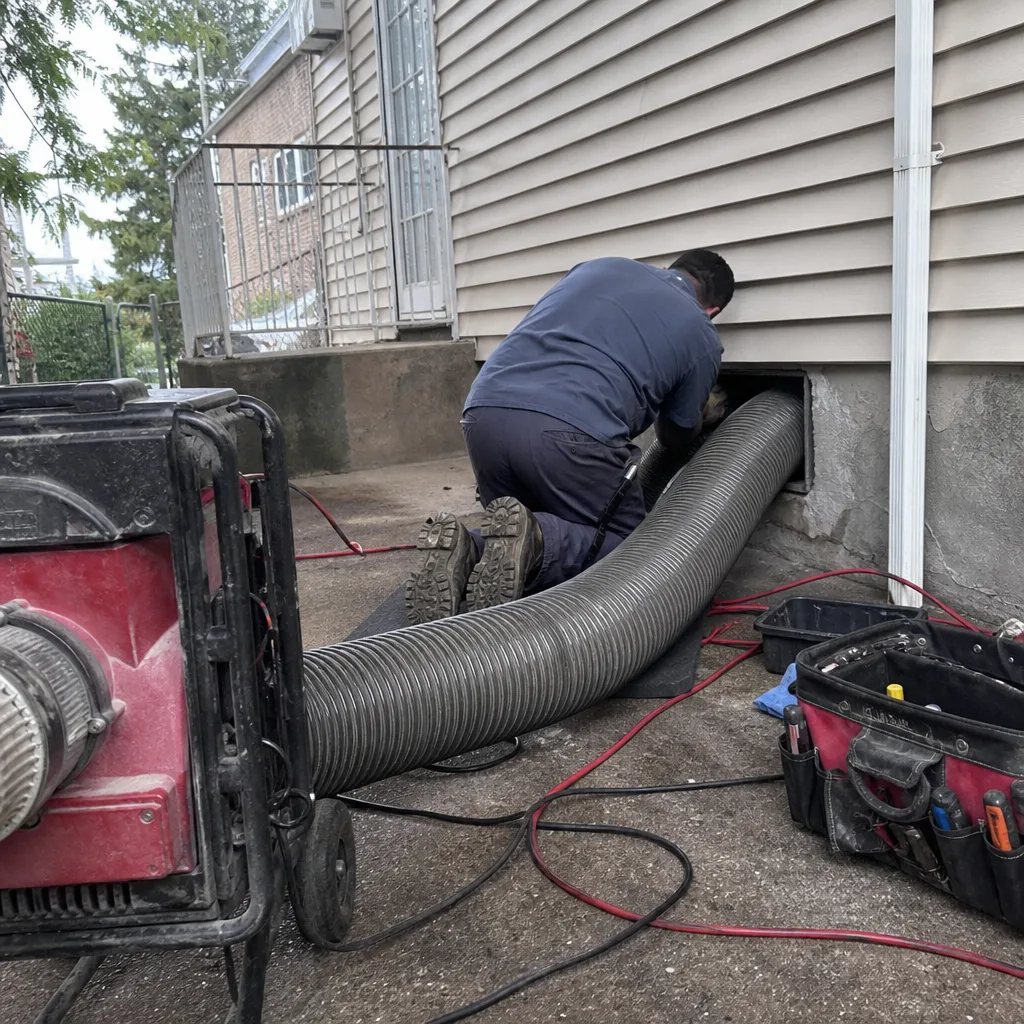
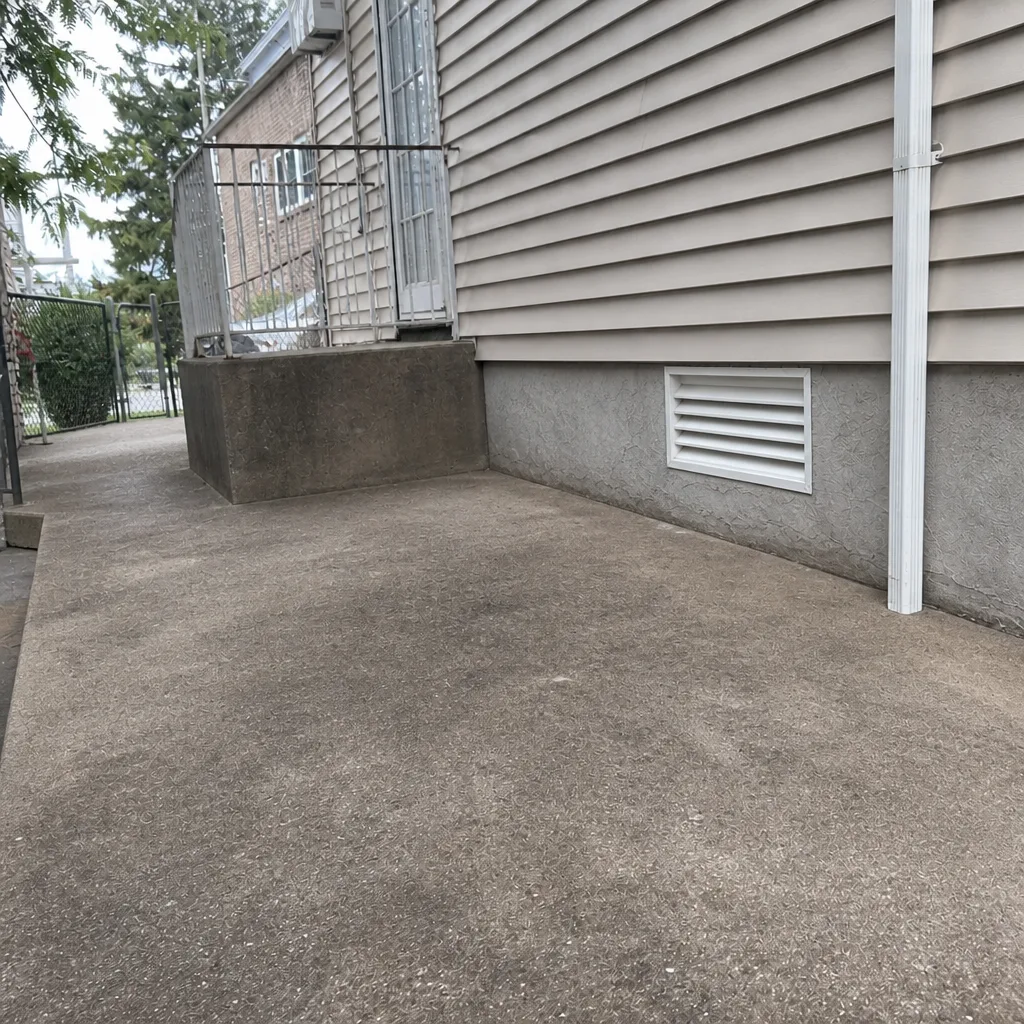
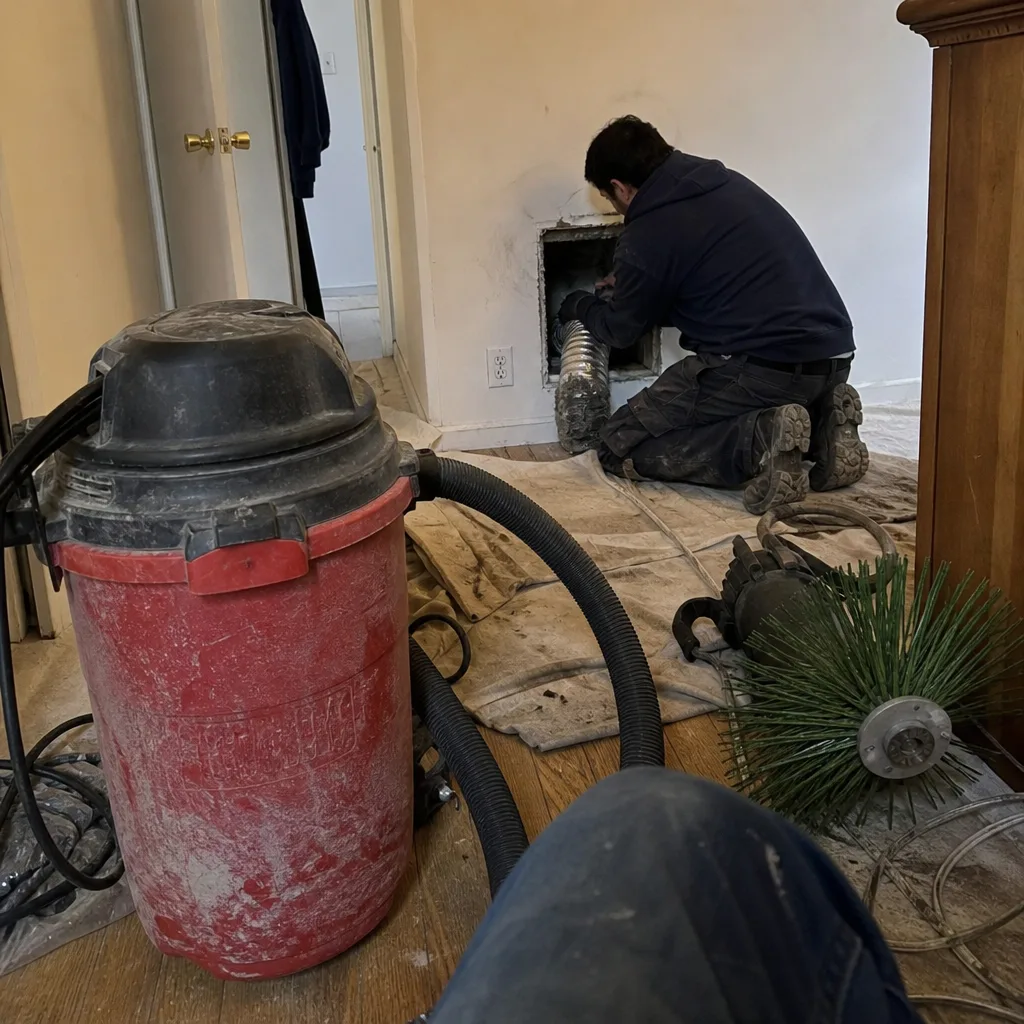
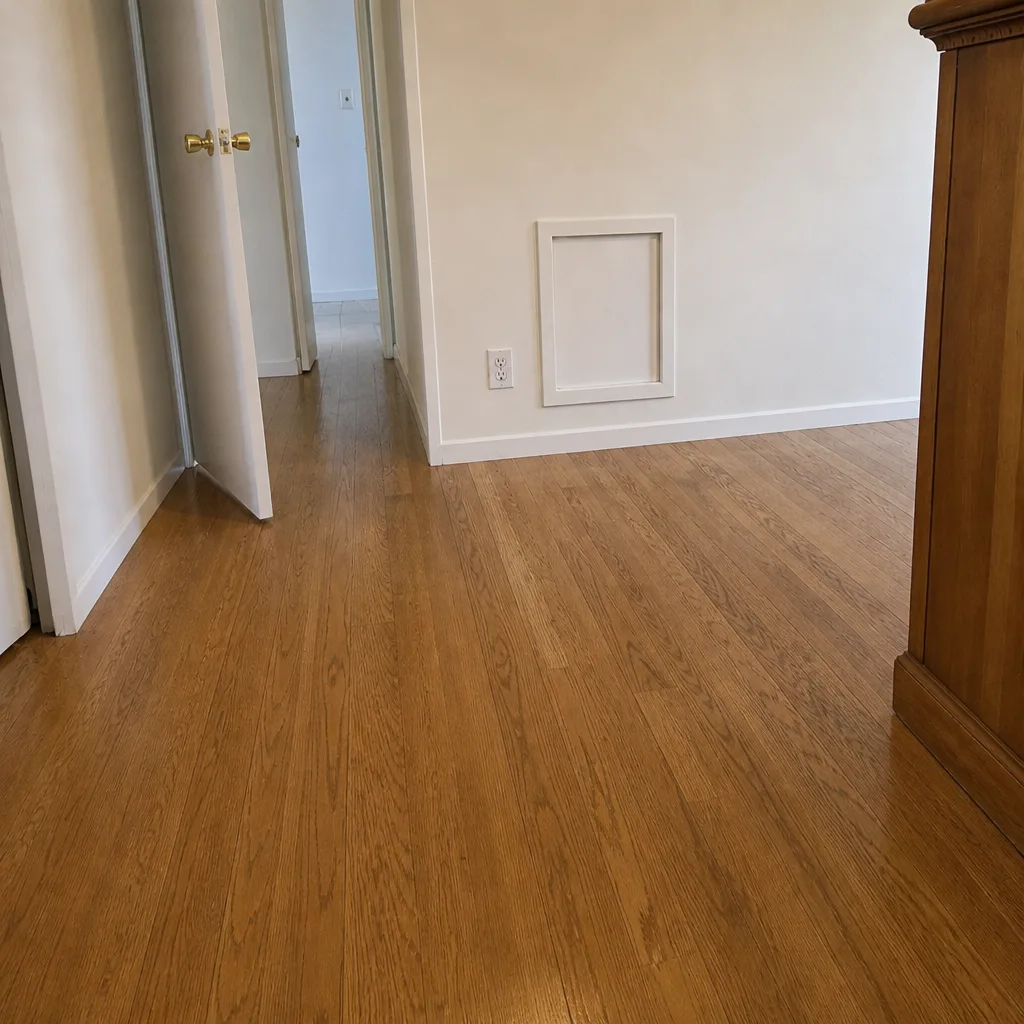
Whole-system duct and dryer vent check with before-and-after photos - you see exactly what came out of your vents
That "$99 whole-house special" is a bait ad - the real number appears once they are in your hallway, or the "clean" is a shop-vac at the register. We photograph the inside of your ducts before and after instead.
The Complete Guide to Air Duct Cleaning in Soundview
A vacuum and a brush can pull a startling amount of debris out of a vent, and your ducts will look cleaner for a few weeks. But none of that equipment tells you why the dust came back so fast, why one bedroom never gets cold, or why the hallway smells faintly musty every time the heat kicks on. In Soundview’s dense housing stock, that “why” is almost always a duct leak, a failed seal, or a compromised return-air pathway that cleaning alone won’t touch. This guide reframes air duct cleaning as what it should be: a full assessment of your HVAC pathway, with cleaning as one output of a larger inspection. We’ll cover what real source-removal cleaning looks like, what equipment tiers change the result, and what a service record should document so you have a baseline for years to come.
Quick Answer
Air duct cleaning in Soundview is a source-removal process that uses negative-air equipment and mechanical agitation to pull accumulated dust, debris, and microbial growth out of the entire duct system, not just the visible registers. It’s worth doing when you notice musty odors, uneven airflow, or a visible dust film returning within weeks. In attached and multi-family Soundview housing, it’s done best alongside a duct integrity inspection, because unsealed joints let debris re-accumulate faster than any cleaning can keep up with.
Styles & brands we work with
- Whole-home duct cleaning
- Dryer vent cleaning
- Camera inspection
- Sanitizing & deodorizing
Table of Contents
- Why Soundview’s Housing Stock Changes the Whole Job
- Source Removal vs. Surface Wipe: How to Tell the Difference
- Why Cleaning Without a Duct Integrity Check Wastes Money
- Equipment Tiers: What Actually Reaches the Duct Wall
- What a Full-System Visit Looks Like, Step by Step
- What a Complete Service Record Should Document
- Dryer Vents and HVAC: The Two Systems Beside Your Ducts
- Air Quality Upgrades That Keep Cleaned Ducts Clean
Why Soundview’s Housing Stock Changes the Whole Job
Soundview is a compact residential neighborhood in the Bronx built up with a mix of attached row housing, multi-family walk-ups, and post-war apartment buildings. That’s an unusual duct environment compared with the suburban single-family homes most cleaning guides assume. Ducts in attached housing share wall and ceiling cavities with neighboring units. Return-air pathways are often short, shared, or retrofitted into wall chases rather than framed as dedicated duct runs. And where a building has been through repeated renovations, ductwork is frequently spliced, extended, or rerouted in ways that leave gaps and untaped seams behind the drywall.
What that means for contamination is concrete:
- Shared return plenums concentrate debris. One unit’s cooking grease, pet dander, and dust pull through a shared pathway and settle where it’s hardest to reach.
- Retrofitted chases leak into building cavities. A duct routed into a wall cavity without a proper seal pulls air from inside the wall, not from the room.
- Vertical stacks in walk-ups collect heavy fall-through. Gravity sends debris down to the lowest branch of a long vertical run, so a whole stack can look immaculate at the top register and be heavily loaded at the bottom.
- Older mechanical rooms mix exhaust and return air. In buildings where a boiler or water heater sits near a return intake, the contamination pattern is different in kind, not just in volume.
None of that changes the goal of cleaning. It changes what a technician needs to inspect before touching a vacuum. A single-family home across the borough with 8-foot runs of straight duct is a different job from a Soundview apartment where the return air path is a 24-inch wall cavity with three displaced joints. If a quote doesn’t account for that difference, it’s a price, not an assessment. That difference is what separates real air duct cleaning from a swipe at the register.
Source Removal vs. Surface Wipe: How to Tell the Difference
Source-removal cleaning is the standard the industry recognizes, and it means every accessible surface of the duct interior is brought under negative pressure while mechanical agitation loosens the accumulated material from the walls, so the debris leaves the system instead of redistributing into the living space. Surface-wipe cleaning is what you get when a technician vacuums the register, brushes the first two feet of visible duct, and calls it done. Those two jobs look identical from the sofa. They are not identical in result.
Here’s how to tell which one you’re actually buying, before any equipment comes out of the truck:
- Ask what the negative-air setup will be. A real source-removal job uses a high-volume vacuum connected to the main trunk line to pull the entire system under negative pressure. If the answer is “we hook to the furnace and brush,” ask how contaminated air is prevented from escaping into the room.
- Ask whether every register gets a drop cloth and every branch gets agitated. Source removal treats the whole duct tree, not just the trunk. A source-removal job has a defined sequence for each branch.
- Ask for the before-and-after photographs before the invoice. A technician doing source removal can photograph the duct interior both before and after. If there’s no photo of the inside, there’s no proof the inside was cleaned.
- Ask about containment during the job. A dust cloud in your apartment is not a sign of thoroughness. It’s a sign the system wasn’t under negative pressure.
- Ask what happens to the debris. It should be collected in a sealed system and removed, not swept into a corner of the mechanical room.
If a quote can’t answer these five questions clearly, the price is telling you something. A very low number for a “whole-apartment cleaning” usually means the technician will agitate the first two feet of each branch and pull whatever was already loose in the trunk. That’s surface work. We use Rotobrush and Nikro equipment, the same class of systems commercial contractors rely on, specifically because they do source-removal work with controlled agitation and the containment that keeps the removed material from ending up back in your living room.
Why Cleaning Without a Duct Integrity Check Wastes Money
Clean ducts in a leaking system are a temporary win. Every gap, untaped seam, and disconnected joint in the ductwork is an unfiltered hole into your supply or return pathway. When a duct pulls 20 percent of its air from inside a wall cavity instead of the room, it also pulls whatever is inside that cavity, and dust settles on the duct walls as soon as the system is running again. The cleaned surfaces become a fresh filter, and the debris film returns within months.
That’s why we treat duct repair and sealing as one of the five service categories alongside cleaning. A technician inspecting your Soundview system checks for the specific failure points that are common here:
- Disconnected joints at hard-to-reach branch takeoffs behind soffits
- Taped seams where the original mastic has dried and shrunk
- Duct sections crushed or partially collapsed during past renovations
- Improperly sealed plenum connections at the air handler
- Panned joist returns with gaps between the joist and the panning
- Cracks in flexible duct at sharp bends or at the connection collar
The order matters: a compromised return pathway should be identified and sealed before cleaning, so the cleaned surfaces have a sealed system ahead of them. If a contractor is happy to clean without looking at joints, ask what will stop the system from re-contaminating itself in six months. If there’s no answer, you’ve found the reason to keep looking. We’re equipped to seal the system as part of the job rather than charging a separate call later, and that’s often the single biggest difference between a cleaning that lasts and one that doesn’t.
Equipment Tiers: What Actually Reaches the Duct Wall
Equipment is where quotes separate. In a 1,200 square foot Soundview apartment, the difference between a portable shop-style vacuum and a purpose-built negative-air duct cleaning system isn’t a luxury upgrade. It’s the difference between removing the visible debris and pulling the accumulated film off the walls. Here’s the honest breakdown of what each tier can and can’t do.
| Equipment Type | What It Reaches | Limitation |
|---|---|---|
| Shop-style portable vacuum | Loose debris near registers | Insufficient static pressure and airflow to move material off duct walls, no containment |
| Portable HEPA duct vacuum | Short branch runs, floor-level systems | Loses power off long runs and vertical stacks; struggles beyond a certain length |
| High-volume negative-air machine | Entire duct tree under negative pressure | Requires a proper duct access point and professional agitation at the same time |
| Rotobrush or Nikro-type agitation system | Full length of each branch with controlled brush rotation | Only effective when combined with negative air, not on its own |
Notice the pattern: negative air moves the debris, agitation frees it from the wall. You need both, and they have to run at the same time in each branch. That’s why a single portable vacuum, even a good one, tops out on surface debris. We use Rotobrush and Nikro agitation with a dedicated negative-air setup so each branch is pulled down while it’s being mechanically brushed. On the air-quality side, we run Abatement Technologies air-purification equipment, which is remediation-grade gear built for sanitizing work rather than a fog of scented liquid and a promise.
Two practical checks you can do yourself:
- Ask what length of run the equipment reaches. If a technician is uncertain about a long vertical stack in a Soundview walk-up, the machine is too small for the job.
- Ask whether the negative-air machine connects to the trunk line or the trunk is opened to the room. The machine connects, or the debris goes into your space.
The same logic applies across all five of the service categories here – duct cleaning, dryer vent cleaning, HVAC cleaning, duct repair and sealing, and air quality and sanitizing – one piece of equipment isn’t the right tool for all of them. We bring the gear the specific job calls for, not the gear the van happens to carry.
What a Full-System Visit Looks Like, Step by Step
A proper visit on a Soundview system runs in a defined sequence, and a technician should be able to walk you through it before starting. Below is what that sequence looks like when we do the job:
- Airflow measurement. Static pressure at the air handler and airflow at the registers are recorded. This establishes a baseline that shows whether the ducts are restricted before cleaning.
- Visual inspection of the duct interior. A camera is run through accessible branches and the main trunk. Debris levels, joint condition, and contamination type are recorded.
- Return-air pathway assessment. The return is often the dirtiest leg of a Soundview system and the easiest to overlook. We assess whether it’s pulling from the room or from a cavity.
- Containment and access. Registers are protected, the negative-air machine is connected to the trunk line, and access holes are cut where the duct configuration requires.
- Agitation per branch. Every branch is brushed with Rotobrush or Nikro equipment while under negative pressure. No branch is skipped, even if it’s short.
- Sanitizing. Where contamination requires it, an EPA-registered sanitizer is applied through Abatement Technologies air purification equipment, so the system is treated rather than spot-sprayed.
- Sealing. Any joint, seam, or discontinuity identified at the inspection stage is sealed before the system is put back together. This is the step that determines whether the cleaning holds.
- Post-clean verification. Airflow is measured again, filter condition is documented, and photographs of the duct interior are collected for your record.
Steps one and eight are the ones a “quick clean” quote doesn’t include. They’re also the only way to prove the job actually did something. If the airflow improved, the photos show it. If a duct is restricted and a joint is leaking, the photos show that too.
What a Complete Service Record Should Document
A service record is the part of the job most customers don’t ask for and later wish they had. Duct systems in Soundview housing don’t fail on a fixed schedule. They re-contaminate at a rate driven by the density of the building, the length of the return pathway, and whether the seals are intact. Without a baseline, nobody can tell you whether your ducts need cleaning twice a year or once every five, and nobody can prove a later contractor did anything at all.
A complete record for a Soundview job should contain:
- Pre-clean photographs of the duct interior from the main trunk and at least one representative branch
- Post-clean photographs of the same locations for a direct comparison
- Static pressure and airflow readings taken before and after cleaning
- A list of sealed joints and repaired sections, so the next technician knows where the system was serviced
- Filter condition and MERV rating documented at the time of service, since a too-restrictive filter can itself cut airflow
- The date, address, technician category, and equipment used on the invoice copy
Keep that packet with your building maintenance records. When you call the next time, the technician can diagnose from a documented baseline instead of starting from zero. It’s a small effort and it changes the diagnosis. If a system that was cleaned two years ago is showing the same contamination level, that’s a signal something upstream – a leak, a ducting problem, or a filter issue – is driving re-contamination. If it’s still clean, you’ve saved the cost of the next cleaning.
Dryer Vents and HVAC: The Two Systems Beside Your Ducts
Two systems sit right beside your ductwork and are usually serviced by different contractors, which is how they end up overlooked. The first is the dryer vent. Lint accumulation in a dryer vent is a leading cause of residential fires, and in attached Soundview housing the run from the dryer to the exterior wall is often long, with a bend or two that trap lint. A dryer that takes two cycles to dry a load, or a hot dryer cabinet without a strong exhaust at the outside vent, is a sign the vent is restricted. This is not a job to postpone or to try to run through with a leaf blower.
The second is the HVAC system itself. Duct cleaning treats the pathway. HVAC cleaning treats the air handler – the blower wheel, the evaporator coil, and the drain pan. A dirty blower wheel cuts airflow just as surely as a duct restriction, and a fouled coil costs cooling efficiency. In a Soundview apartment where one wall unit handles the entire home, a dirty coil is not a minor inefficiency. It’s the reason the unit can no longer keep up on the worst days of summer.
If your system is pulling debris from a fouled blower and pushing it through clean ducts, you’ve wasted the cleaning budget. That’s why we offer HVAC cleaning and duct cleaning together. Our technicians have up to 8 years of experience with these systems, and they know how to read the condition of the blower and coil before deciding what to clean. One call covers your dryer vent, air handler, and ducts, which spares you the headache of coordinating three separate contractors in a Soundview building where access and scheduling are already a challenge.
Air Quality Upgrades That Keep Cleaned Ducts Clean
Cleaning resets the system. What you do after the cleaning determines how long it stays reset. Three upgrades matter more than packaged air fresheners:
- Filtration. A properly sized filter at the correct MERV rating catches what the ducts pull in before it reaches the blower. Too high a MERV rating with too little filter area cuts airflow, so the filter choice is part of the diagnosis, not a pickup at the hardware store.
- Humidity control. In Soundview’s older housing, humidity in summer migrates from basements and shared wall cavities. If the system is pulling damp air through, the ducts become a growth surface. We install air duct cleaning service lines more cleanly when the humidity is controlled upstream, and Honeywell and Aprilaire products cover that part of the job.
- Whole-home air quality equipment. We sell and install Honeywell and Aprilaire filtration and air quality solutions that extend a single cleaning into a long-term air quality outcome. That’s the difference between a job that lasts months and one that holds for years.
The pattern here is that cleaning is step one. A system – filters, humidity, and sealed ductwork – either keeps the ducts clean or pulls contamination back in. The same Rotobrush, Nikro, and Abatement Technologies equipment runs the cleaning and sanitizing side, while Honeywell and Aprilaire handle what stays installed afterward. If a contractor is willing to sell the cleaning but not address what’s upstream, you’ll be back in the same position in a few months.
Common Mistakes to Avoid
- Buying a cleaning without an inspection. If a technician quotes and cleans without any camera work or airflow measurement, they can’t diagnose the source of the contamination. And that source is what determines whether the job holds.
- Skipping the return-air pathway. In Soundview multi-family and attached housing, the return is usually the dirtiest leg of the system. Cleaning only the supply side removes debris from the cleaner half of the system and leaves the real accumulation in place.
- Cleaning without sealing. A duct leak pulls unfiltered air and debris back into the system within weeks. Cleaning without repairing the seal is a job with no lasting result. Ask whether joint sealing is part of the scope.
- Choosing the lowest flat price without asking about equipment. A quote that can’t say what negative-air and agitation equipment will be used is usually priced for surface work. The difference in result is not subtle once you see the before-and-after photographs.
- Ignoring the dryer vent. A long, restricted dryer vent in a Soundview walk-up is a fire safety issue, not an efficiency issue. It belongs in the same assessment as the ductwork, not on a separate to-do list that keeps slipping.
- Assuming a newer filter fixes a dirty system. A high-MERV filter catches what reaches the filter, not what’s already on the ducts. And an oversized filter rating with too little surface area cuts airflow, which makes the system work harder, not cleaner.
- Not keeping the service record. Without before-and-after photos, airflow readings, and a record of sealed joints, the next technician starts from zero, and no one can show you what was or wasn’t cleaned last time.
See the difference
 Before
 After
 Before
 After
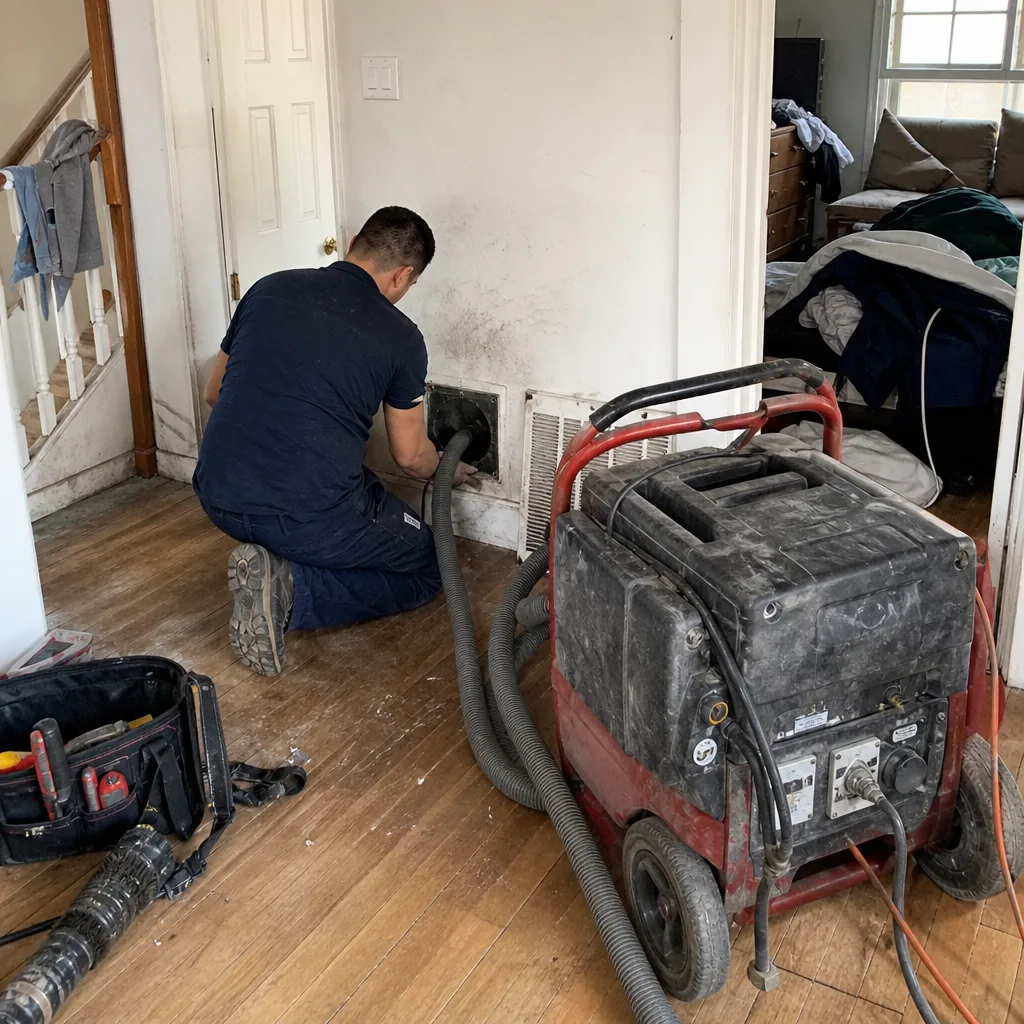 Before
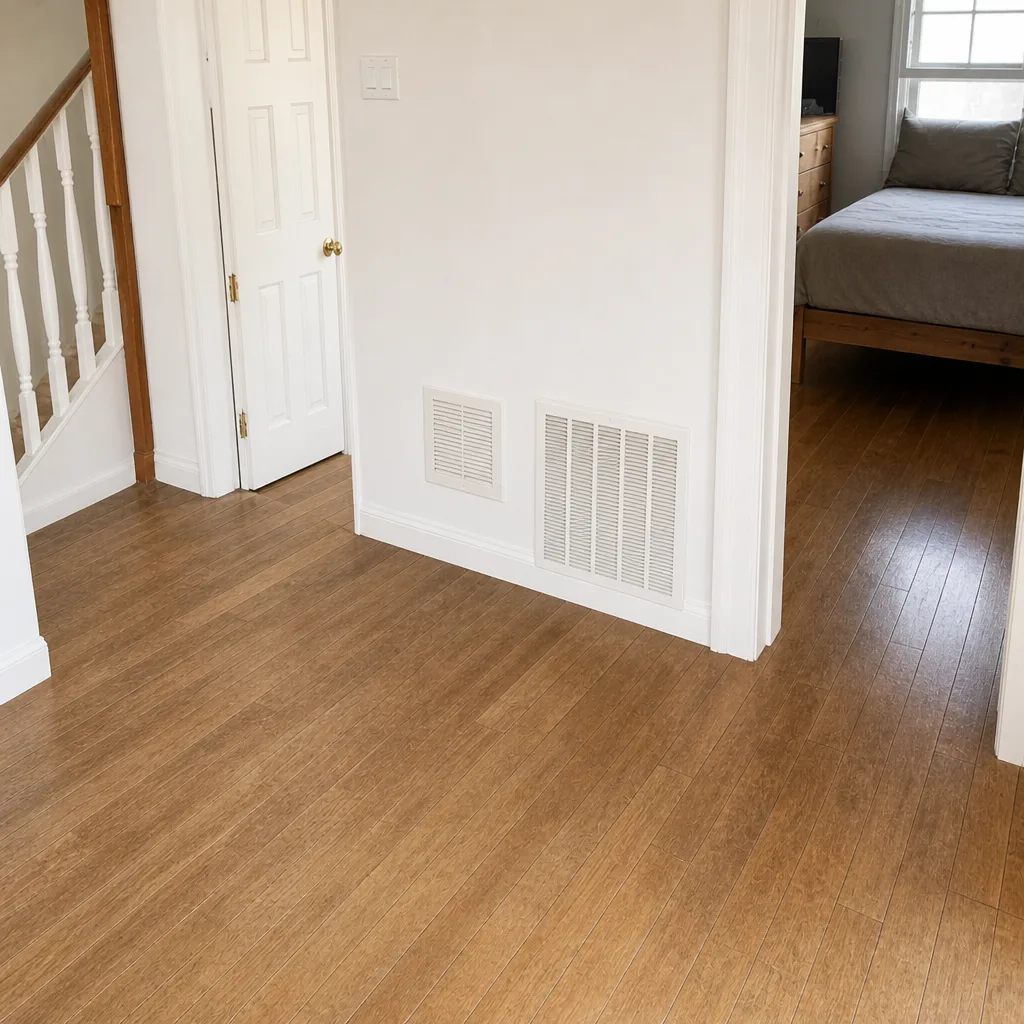 After
When to Call a Professional
If you notice a visible dust film returning within a few weeks of any cleaning, musty or damp odors when the system runs, or consistent uneven airflow between rooms, that’s a diagnosis job, not a cleaning job. Rotted or damaged ductwork, disconnected joints behind a soffit, and any ductwork in a Soundview building near a boiler or gas appliance are not things to inspect with a screwdriver and a shop vac. A trained technician with a camera can identify the problem safely in a way that a homeowner can’t from behind a register.
For the on-site portion of the work, if you’re noticing a lint buildup or a dryer taking multiple cycles, or if you’ve never had the return-air pathway assessed, that’s a call. Air Duct Cleaning Soundview offers free estimates in Soundview, and the written estimate sets the final price, so nothing is billed past what you agreed to before work begins. Call (844) 630-1582. We answer 24/7. Fast dispatch from 7am to 7pm, Sunday through Friday.
Frequently Asked Questions
There isn’t a single price for Soundview because the whole system is quoted, not the vent count. The estimate depends on the number of branches, duct length, access difficulty in attached housing, and whether sealing or sanitizing is included. That’s why we quote one flat price per system from a written estimate after inspection, not a per-vent figure or a low teaser that grows on the invoice. Call (844) 630-1582 for an exact quote. Estimates are free.
There’s no fixed schedule. In a Soundview apartment with a sealed system and a clean return path, cleaning every few years may be enough. In attached housing with a shared return or a leaking duct, re-contamination can be fast enough that the ducts should be checked sooner, and the check tells you which case you’re in. Call (844) 630-1582 to book an inspection and get a documented baseline.
Because they’re quoting a different job. A quote that includes only a portable vacuum and a register sweep is a surface-wipe job, and the price reflects that. A source-removal cleaning with negative-air equipment, camera inspection, branch-by-branch agitation, and photographic proof costs more, and it does more. The comparison that matters is the before-and-after photographs, not the headline price. Call (844) 630-1582 for a quote you can compare against the others.
You should see before-and-after photographs of your duct interior, airflow readings taken before and after cleaning, and a record of any joints sealed or sections repaired. Ask for those before you pay. If a technician can’t provide them, you have no evidence the interior of the duct was cleaned at all. Call (844) 630-1582 to schedule a job that includes the documentation.
It shouldn’t. A real source-removal job puts your duct system under negative pressure for the entire cleaning, so loosened debris is pulled into the collection system instead of into the living space. If a technician shows up without a negative-air machine on the trunk line, walk away, because a dust cloud in your apartment is a sign the containment was never there. Call (844) 630-1582 to book a source-removal cleaning with containment.
Both belong with your ductwork. Dryer vents are a leading cause of residential fires and are easy to overlook in a Soundview building where the run is long. A dirty blower wheel or coil in the HVAC system cuts airflow just as surely as a duct restriction. We handle air ducts, dryer vents, HVAC systems, duct repair and sealing, and air sanitizing, so one assessment covers all of it. Call (844) 630-1582.
Minor cleaning usually doesn’t require a permit. Structural duct repairs or work that changes the HVAC configuration may. Permit rules for HVAC work vary, so ask your building department or property manager before any work that alters ductwork or the air handler, especially in a multi-family Soundview building where shared systems are involved.
The Bottom Line
Air duct cleaning in Soundview is not the same job it is in a suburban single-family home, and treating it as a one-time sweep of the visible registers is how homeowners end up with a cleaning that doesn’t last a season. The system has to be inspected first, cleaned with real source-removal equipment – Rotobrush and Nikro agitation under proper negative air – and then sealed wherever joints or returns let debris back in. Sanitizing with Abatement Technologies equipment and installing Honeywell or Aprilaire filtration is the part that keeps the result. And the service record of before-and-after photos, airflow readings, and a list of sealed joints is what proves it and guides the next cleaning. If you want one team to assess the whole system rather than a vacuum pointed at one vent, you know who to call.
Air Duct Cleaning Soundview offers free estimates in Soundview, and one flat price per system is agreed before any work begins. You get before-and-after photos of your own ducts. Call (844) 630-1582. We answer 24/7. Fast dispatch from 7am to 7pm, Sunday through Friday, and we’re closed Saturday.
Written by the team at Air Duct Cleaning Soundview.