
Emergency Air Duct Cleaning Near Me: What Soundview Homeowners Should Do First
If you smell burning from your vents, see mold around a register, or hear something moving in the ductwork, the first call isn’t a cleaning crew. Those symptoms point to an HVAC problem or an active contamination source, and vacuuming before anyone identifies the cause can push soot, spores, or pests deeper into the system. In Soundview, the right first step is to shut the system down and figure out what you’re actually dealing with.
Here’s how to triage that.
Why “Emergency Duct Cleaning” Is Usually the Wrong First Label
Homeowners in Soundview search for emergency air duct cleaning because something feels urgent: a smell, a noise, a sudden drop in airflow, visible growth on a vent cover. What we’ve found is that these situations fall into two categories, and only one of them involves duct cleaning as the starting point.
The first category is an HVAC failure or safety event. A burning smell, a scorched filter, or a system that runs hot fits here. That’s a mechanical problem. Duct cleaning on a system with a failing component doesn’t fix anything and can circulate the problem.
The second category is a contamination event. Mold at registers, rodent activity, soot after a fire, or water damage after a flood fits here. This needs assessment and, often, cleaning plus repair, not just a vacuum pass.
Both categories start the same way: stop the system and get the situation in front of someone who can diagnose it.
How Do I Triage the Emergency? Four Scenarios and What Each One Needs
The correct first step depends entirely on what you’re seeing or smelling. Run through this list before you call anyone.
Burning smell from vents. Shut the HVAC system off at the thermostat. Check the filter for debris or a label that’s touching the blower. If the smell persists with the system off, that’s an HVAC inspection issue, not a cleaning issue. Don’t run the system to “clear it out.”
Visible mold at registers or on vent covers. Turn the system off and photograph what you see before wiping anything. Mold on a vent cover is a symptom. The question is whether moisture is coming from inside the duct, from a condensation problem in the HVAC unit, or from a separate leak nearby. Cleaning without finding the moisture source means it comes back.
Pest intrusion. If you hear movement, see droppings, or find nesting material near a register, turn the system off. Running it can spread droppings and debris through the whole system. Pest control comes first, then a full duct assessment and cleaning once activity has been handled.
Post-flood or water damage. Any ductwork exposed to standing water or sustained moisture needs to be assessed for structural integrity, not just dried out. Water-damaged ducts that are still sound can often be cleaned and sanitized. Ducts that have deteriorated need repair or replacement, which is a multi-day job.
Shutting the system off is the one step that applies to all four scenarios.
When Should I Turn the HVAC Off Before Help Arrives?
Turn the system off immediately in any situation where contamination is actively moving through it. Running a system with mold, pest debris, or soot present spreads the problem from one area to the entire duct network, and the cleanup scope grows with every hour the fan runs.
Reasons to shut it down:
- A burning or chemical smell is present with the system running
- You can see mold growth at any register or on the air handler
- You’ve found droppings, nesting material, or evidence of pest activity
- There’s been a fire, flood, or water intrusion in the home
- Airflow has stopped entirely on one or more vents (this often signals a blower or duct issue)
Reasons you can usually leave it running while you wait for an appointment:
- Dust buildup you’ve noticed over time with no smell, mold, or water issue
- A routine cleaning you’ve been meaning to book
If you’re unsure, shutting it off costs nothing. Running it might.
What Does Same-Day Emergency Duct Cleaning Realistically Cover in Soundview?
Same-day service can handle assessment and treatment of an active contamination event in one visit, but it can’t compress multi-day remediation into an hour. Here’s the honest split.
Realistic same-day scope:
- A full inspection of the duct system, air handler, and registers
- Source-to-register cleaning with professional equipment
- Sanitizing where contamination is confirmed
- Sealing open joints or disconnected sections when the problem is bypass air
Requires a second visit or a longer process:
- Duct repair or replacement where sections have failed
- Fire or soot remediation with a documented scope, often coordinated with your insurer
- Post-flood scenarios where drying, assessment, and repair follow in stages
- Pest cleanup that needs pest control work to complete first
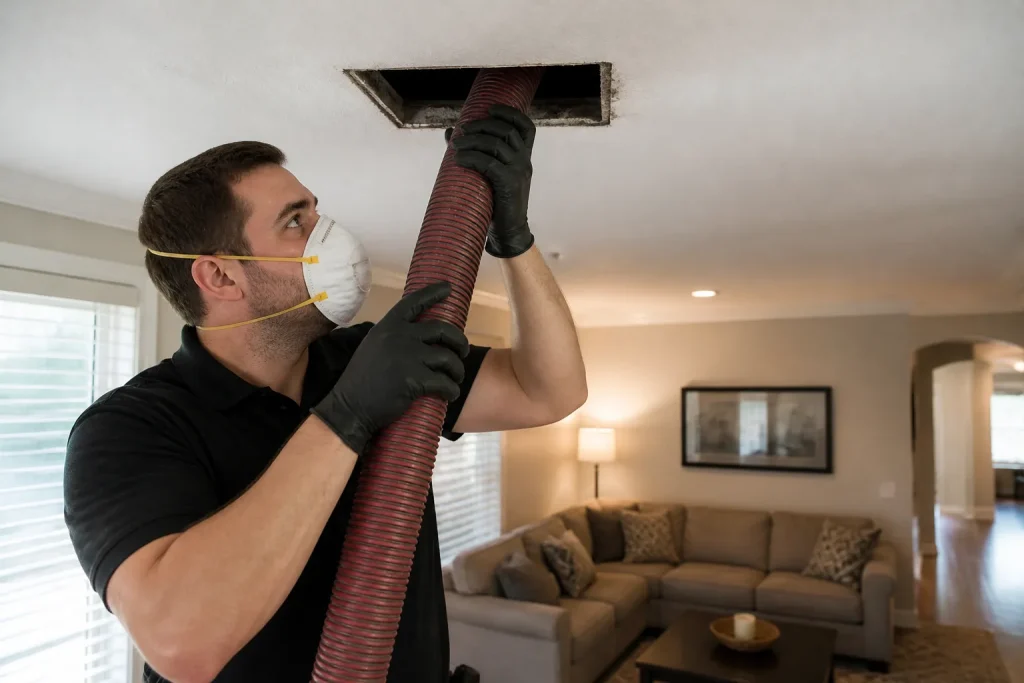
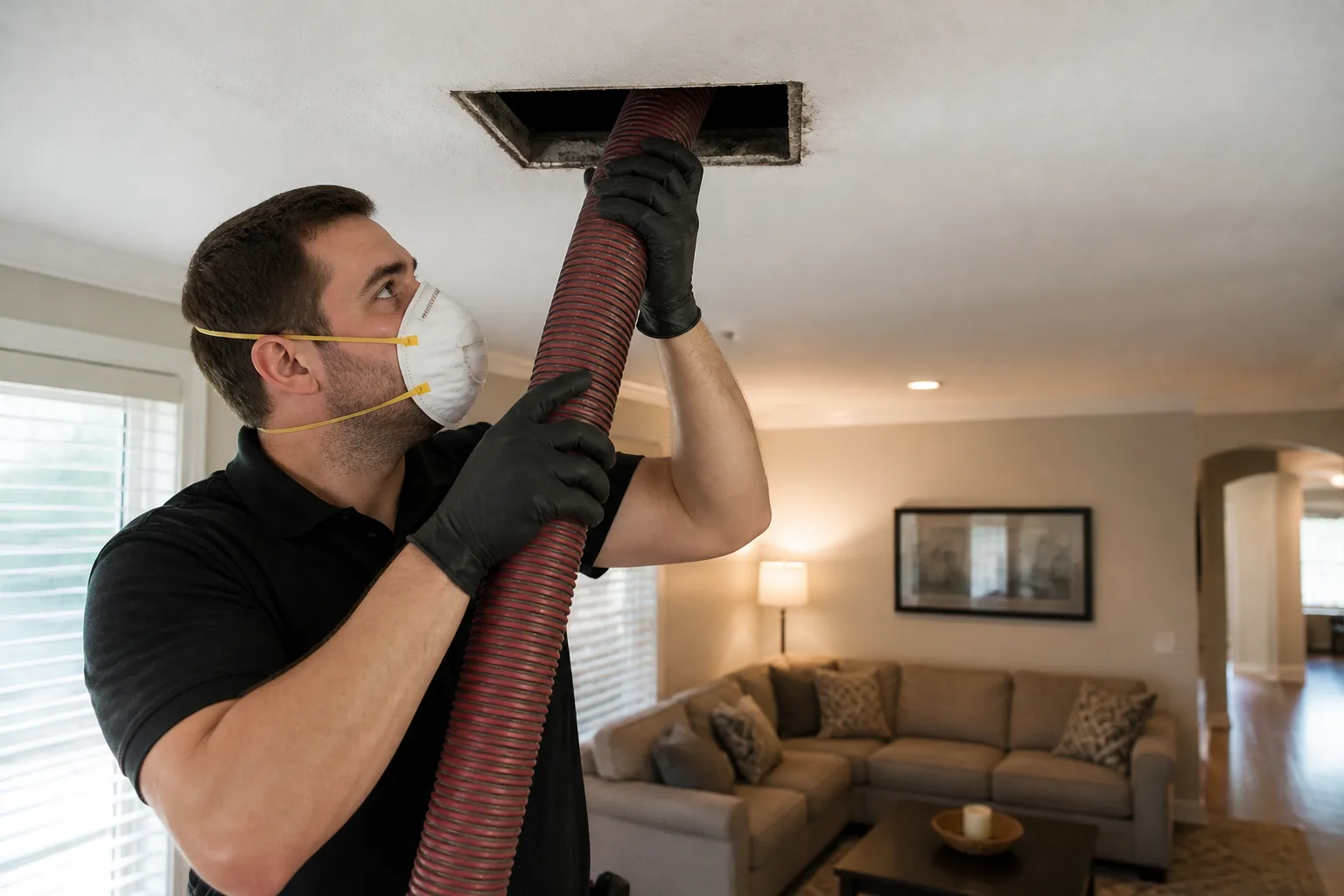
When we arrive, we assess first and then clean what actually needs cleaning. We use Rotobrush and Nikro systems, the same professional equipment used in commercial buildings, because a shop vac doesn’t touch the volume of material an active contamination event puts into a system. For sanitizing after confirmed mold or biological contamination, Abatement Technologies air-purification equipment lets us treat the space, not just vacuum the ductwork.
Which Situations Need More Than Duct Cleaning?
Three situations look like duct cleaning problems but aren’t only duct cleaning problems. All three need additional work for the fix to hold.
Sewage backup into the ductwork. Sewage contamination is a category-three water event. Duct cleaning removes the material, but the space needs sanitizing with remediation-grade equipment, and the moisture source has to be identified before anything is resealed. Ask your contractor what sanitizing process they use and what it’s rated for. We use Abatement Technologies air purification for exactly this reason.
Rodent infestation. Cleaning without pest control first just resets the clock. Pest removal, entry-point sealing, then duct cleaning and sanitizing is the sequence that works. Cleaning first spreads contamination and doesn’t stop re-entry.
Fire soot in ducts. Soot doesn’t stay in the duct. It’s acidic, it can deposit on HVAC components, and it carries odor for months if not addressed at the source. A typical fire-contamination job involves cleaning the duct system, the air handler, and often the connected registers. It also involves documentation for an insurance claim.
If the situation involves active water, pests, or fire residue, a HVAC cleaning assessment should come before anyone starts vacuuming ductwork. For dryer vent fire risk, which is a separate but related issue, a dryer vent cleaning handles it directly.
How Should I Document the Situation Before a Crew Arrives?
Photograph everything before you wipe, vacuum, or move furniture. This serves two purposes: it gives the technician a clear picture of the original condition, and it gives you evidence if you’re filing an insurance claim.
Here’s what to capture:
- Wide shots of each affected room, showing the register in context
- Close-ups of mold, soot, droppings, or debris at each register
- Photos of the air handler and any visible filter condition
- Video of any sound from the ductwork, if you can safely capture it
- A quick note of when the problem started and what you did before calling (did you shut the system off, change the filter, open windows)
Photographs also help a technician scope the job accurately over the phone. If you’re comparing estimates, ask each contractor what they’ll actually do inside the ducts, not just what they’ll bring. Before-and-after photos of your own system after the job are also something you should expect and ask for.
When to call a pro: if the situation involves burning smells, suspected mold, pest activity, or water intrusion, don’t try to handle it yourself. These are scenarios where a trained technician needs to assess the full system, not just the vent in front of you. Our technicians have up to 8 years of experience working with a range of duct configurations in Soundview and the surrounding area.
Related services in Soundview: if the assessment shows compromised ductwork, duct repair and sealing can fix it. If it shows mold or persistent odor, air quality and sanitizing takes the next step. For a routine cleaning without an active emergency, you can start with an air duct cleaning and we’ll assess the full system during the visit.
The Bottom Line
Most “emergency duct cleaning” situations in Soundview are either HVAC failures or active contamination events. The first step in either case is the same: shut the system off, photograph what you see, and get a technician out to diagnose the cause before anyone starts vacuuming. Cleaning after the diagnosis is what fixes the problem. Cleaning before it just makes a mess harder to find.
If you’re in Soundview and need help, Air Duct Cleaning Soundview offers free estimates. Call (844) 630-1582. We answer 24/7. Fast dispatch, 7am-7pm, Sunday through Friday. The local pro we connect you with is licensed and insured as their state requires, and the price is set per job by a written estimate agreed before any work starts.
Frequently Asked Questions
No. Running the system while an unknown contamination source is present spreads it through the entire duct network. Shut the system off at the thermostat, then call for an assessment. If the smell comes back once the system is off, it’s likely an HVAC issue rather than a duct cleaning issue, and it needs an inspection first.
Same-day assessment is usually possible when you call within dispatch hours. The actual scope of the fix depends on what the technician finds: a straightforward cleaning can often be done in one visit, while mold remediation, fire soot, or duct repair usually needs a second appointment. Call (844) 630-1582. We answer 24/7, with fast dispatch from 7am to 7pm, Sunday through Friday. A call outside dispatch hours is booked into the next opening.
Only if the moisture source is also fixed. Cleaning removes visible mold growth, but if condensation buildup in the HVAC unit, a leak, or a humidity problem keeps feeding it, the mold returns. We use Abatement Technologies air-purification equipment for sanitizing after cleaning, because surface wiping alone doesn’t treat active growth. Ask any contractor what they’ll use for sanitizing, not just cleaning.
That depends on the duct material and how long it’s been wet. Metal ductwork that’s still structurally sound can often be cleaned and sanitized. Flex duct or duct board that has absorbed water usually can’t be fully dried out and needs replacement. A technician needs to inspect it in person to make that call. Call (844) 630-1582 for a free estimate and an honest assessment of which route makes sense for your system.
Written by the team at Air Duct Cleaning Soundview.
Need Air Duct Cleaning Help?
Call Air Duct Cleaning Soundview - the local pro we connect you with is licensed and insured, here with fast help in Soundview.
(844) 630-1582